Best overall: a smooth, medium-firm foam roller. Best for pressure-sensitive beginners: a soft foam roller. Best for pack-light shoppers: a compact roller. This 2026 guide compares the best foam rollers for muscle recovery by pressure, shape, storage, and practical use—not by how aggressive they look.
- Best foam rollers for muscle recovery: choose a smooth, medium-firm roller as your default.
- Soft foam rollers suit beginners who need gentler pressure and easier control.
- Compact foam rollers suit travel, but sacrifice usable rolling length.
- Silvers Sports Mess recommends choosing recovery accessories by intended use, not appearance.
Why this matters
A foam roller is a cylinder you use to apply pressure to muscles through controlled movement. Its usefulness depends on whether you can position yourself comfortably and regulate that pressure. A roller that makes you brace, hold your breath, or abandon the session is the wrong starting point.
For shoppers at Silvers Sports Mess, the foam roller buying rule is simple: choose the least complicated design that suits your routine. A sports accessory earns its place through repeated use, not through extra features alone.
This guide ranks roller types rather than individual branded models. Use the comparison to narrow your search, then check the chosen product's dimensions, construction, care instructions, and intended use before buying.
What makes the best foam rollers for muscle recovery?
Evaluate these criteria before comparing surface patterns or accessory bundles. For your 2026 shortlist, pressure control comes first.
- Controllable pressure: You should be able to reduce pressure by supporting more weight through your hands, feet, or opposite leg.
- Surface shape: Smooth surfaces provide uninterrupted contact. Raised patterns create distinct contact points; they are not automatically better.
- Usable length: Compare common options such as 12 inches, 18 inches, and 36 inches against your intended position and storage space. These are shopping reference sizes, not specifications for a particular product.
- Construction: Check whether the listing describes solid foam, a hollow core, or another structure. Surface softness and internal support are separate characteristics.
- Care requirements: Read the actual cleaning instructions. Do not assume every foam material tolerates the same cleaner or storage conditions.
- Setup burden: Charging, controls, and extra accessories add tasks. Accept them only when they support a use you actually want.
Density is also different from comfort. Product descriptions sometimes use firmness and density interchangeably, but the terms do not tell you everything about how a finished roller feels. Compare the full construction rather than choosing from one adjective.
Foam rollers at a glance: 2026 buying shortlist
Each option below owns a different use case. The order matches the detailed recommendations that follow.
| Roller type | Best for | Standout characteristic | Key limitation |
|---|---|---|---|
| Smooth, medium-firm | Everyday rolling | Plain surface without concentrated ridges | Firmness labels vary between listings |
| Soft foam | Pressure-sensitive beginners | More yielding contact | Can feel insufficient for shoppers wanting firm pressure |
| Firm, smooth | Experienced users | Firm contact without raised patterns | Less forgiving when weight control is poor |
| Textured | Shoppers who prefer distinct contact points | Raised ridges or nodules | Concentrated contact is not comfortable for everyone |
| Compact | Travel and limited storage | Shorter physical footprint | Less room for positioning and repositioning |
| Vibrating | Shoppers who specifically want powered vibration | Adds vibration to a rolling surface | Charging and controls complicate ownership |
The smooth, medium-firm foam roller is the default choice because it keeps the buying decision focused on fit and pressure control. Choose another type only when its distinct feature solves a specific problem.
1. Smooth, medium-firm: best foam roller for everyday use
A smooth, medium-firm roller is the clearest starting point for a general rolling routine. Its plain surface avoids the separate decision of which ridge pattern to choose. You still control the pressure through your body position.
Look for a listing that explains construction and gives usable dimensions. Medium-firm is a description, not a universal measurement, so do not assume two models with that label feel identical.
Smooth, medium-firm pros:
- Plain contact surface without raised pressure points.
- Straightforward design with no charging or operating controls.
- Easy starting point for comparing length and construction.
Smooth, medium-firm cons:
- Firmness labels do not provide a standardized comparison.
- One cylinder shape does not suit every body area or position.
Best for: Shoppers building an everyday routine who want a simple first roller.
Before buying, picture where you will use it. A longer roller needs floor and storage space; a shorter one requires more attention to positioning. Neither size solves pressure control for you.
Verdict: Buy as your default, provided the dimensions suit your space.
2. Soft foam: best foam roller for pressure-sensitive beginners
A soft foam roller offers a more yielding surface than a firm roller. That makes it the first type to consider when firm contact feels uncomfortable. It still requires controlled movement and a position you can maintain without strain.
Do not confuse soft with universally appropriate. Tenderness, recent injury, or unexplained pain needs a different decision from ordinary accessory shopping.
Soft foam pros:
- More yielding contact for shoppers who dislike firm surfaces.
- No need to choose a raised texture pattern.
- Simple operation without powered components.
Soft foam cons:
- Does not suit every preference for firm pressure.
- Softness alone says nothing about long-term shape retention.
Best for: First-time users who prioritize comfort over intense contact.
For a gift, soft foam avoids deliberately choosing an aggressive surface, but the recipient's preferences still matter. Check whether they already use a roller and what they dislike about it. Replacing a familiar tool with a different firmness is not automatically an upgrade.
Verdict: Buy when gentler contact is your main requirement.
3. Firm, smooth: best foam roller for experienced pressure control
A firm, smooth roller separates firmness from texture. It gives shoppers a way to choose firmer contact without also choosing raised ridges. That distinction matters when you already know you dislike textured surfaces.
Buy this type because you prefer its feel, not because you expect discomfort to produce a better result. You should still be able to unload pressure and move without forcing the position.
Firm, smooth pros:
- Firm contact without a raised surface pattern.
- No battery, charging cable, or operating menu.
- Clear alternative for users who find soft foam too yielding.
Firm, smooth cons:
- Less forgiving when you cannot regulate body weight.
- Firm contact does not make it appropriate for injured areas.
Best for: Experienced users who want firm contact and already understand their preferred positions.
Check both the outer material and the core description. A hard internal structure and a soft outer layer are different from a solid foam cylinder. The word firm does not explain that construction by itself.
Verdict: Buy only when firm contact is an established preference.
4. Textured: best foam roller for distinct contact points
Textured rollers use ridges, grooves, or nodules to change where the surface contacts your body. The pattern is the defining feature. It is not proof of better recovery or a reason to tolerate pain.
Compare the actual surface shown in the listing. Broad ridges and prominent nodules are different shapes, even when both products are described as textured rollers.
Textured pros:
- Offers a contact pattern distinct from a smooth cylinder.
- Lets texture-preferring shoppers choose a familiar surface style.
- Available as a non-powered design without charging tasks.
Textured cons:
- Raised areas concentrate contact rather than spreading it evenly.
- Product photos cannot establish how comfortable the pattern feels.
Best for: Users who already know they prefer ridges or nodules.
Avoid buying from appearance alone. An elaborate pattern adds another variable to your choice, and a dramatic product photo does not explain whether you will enjoy using it. Start with the shape you know, then compare construction and dimensions.
Verdict: Hold unless textured contact is a confirmed preference.
5. Compact: best foam roller for travel and small storage spaces
Compact rollers prioritize a smaller footprint. Their main advantage is logistical: a shorter cylinder takes less length in a bag, cupboard, or workout corner. That trade-off comes with less usable rolling surface.
Check diameter as well as length. A short roller can still be bulky, and a hollow center does not automatically make the whole product lightweight.
Compact roller pros:
- Shorter footprint for storage and packing.
- Useful when a full-length cylinder will not fit your space.
- Keeps portability separate from powered features.
Compact roller cons:
- Less room to reposition without reaching the edge.
- Travel suitability still depends on diameter and actual weight.
Best for: Travelers and apartment shoppers whose main constraint is space.
As a practical buying check, compare a 12-inch option with an 18-inch option rather than assuming every compact label means the same thing. For a home-only setup, consider whether a 36-inch option suits your intended exercises and available floor area. Those dimensions help frame the choice; they do not rank quality.
Verdict: Buy for a real packing or storage constraint, not merely a smaller-looking product photo.
6. Vibrating: best foam roller for shoppers wanting powered vibration
A vibrating roller combines a rolling surface with a powered vibration function. That is a separate feature preference, not a requirement for owning a useful roller. Your body position still determines much of the applied pressure.
For a 2026 purchase, check the actual charging method, controls, care instructions, and operating guidance. Do not transfer specifications from another model with a similar appearance.
Vibrating roller pros:
- Adds powered vibration for users who want that sensation.
- Combines vibration and a rolling surface in one accessory.
- Provides a distinct alternative to non-powered rolling.
Vibrating roller cons:
- Requires charging and attention to operating instructions.
- Powered parts add care considerations beyond a plain cylinder.
- Vibration settings alone do not establish recovery benefits.
Best for: Shoppers who have a clear preference for powered vibration and accept the extra upkeep.
The presence of a motor does not settle the rest of the comparison. You still need to choose length, surface shape, and suitable firmness. Treat vibration as an added requirement after those basics, not as a shortcut around them.
Verdict: Wait unless powered vibration is specifically what you want.
Match the roller to the reason you are buying
Use this sequence to turn the shortlist into a purchase decision. Silvers Sports Mess foam roller guidance starts with the buyer's constraint, not the longest feature list.
- Choose contact. Decide whether you prefer yielding, medium-firm, or firm contact. If you have no established preference, start with smooth rather than adding texture immediately.
- Check dimensions. Match the stated length and diameter to your intended position, storage area, and bag. Measure the space instead of relying on a lifestyle photo.
- Check construction. Read what the product says about its foam and core. Do not infer material, durability, or weight from appearance.
- Check upkeep. Confirm cleaning instructions and, for powered models, charging requirements. Reject extras you do not want to maintain.
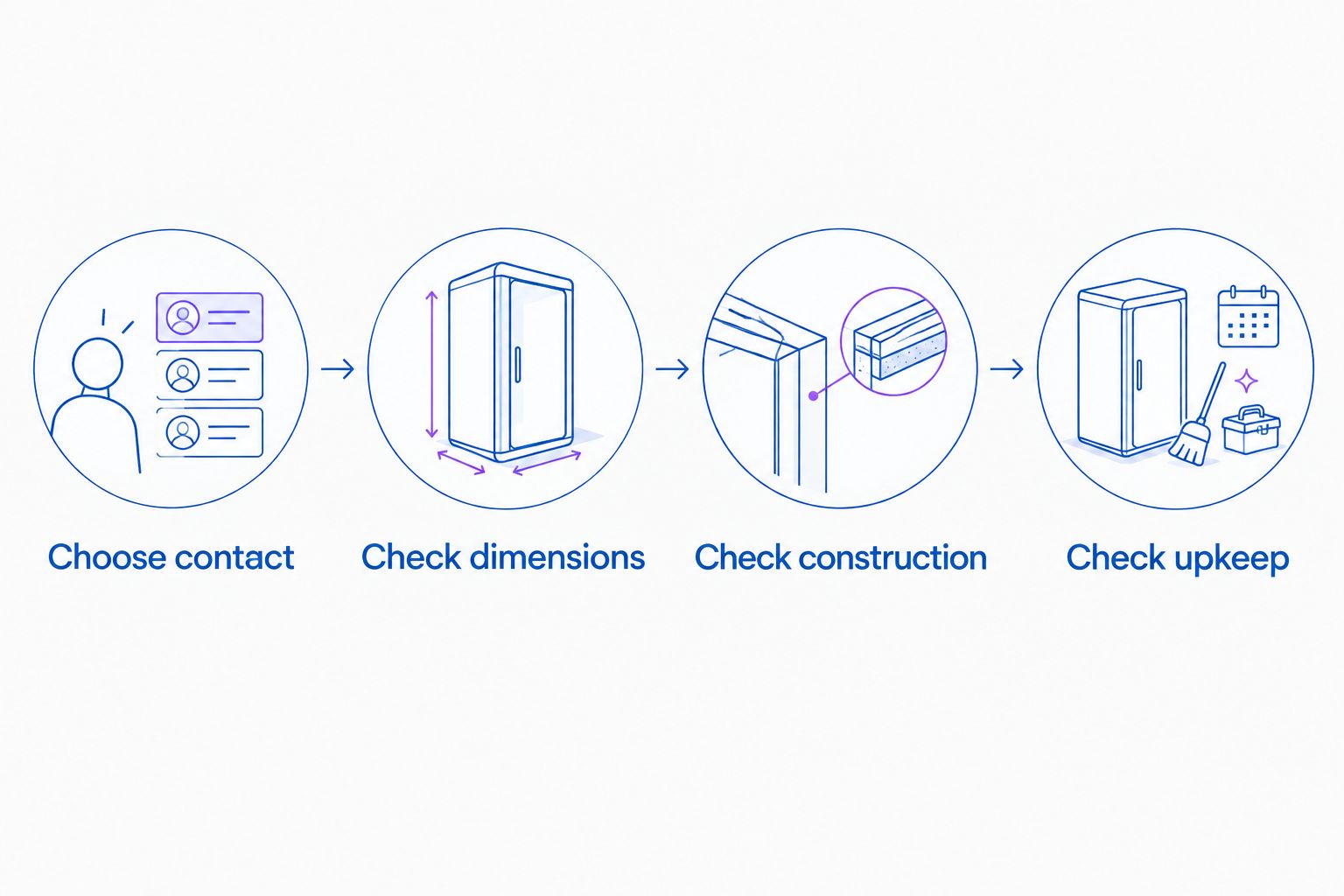
After these checks, the decision should be narrower. If several models still look equivalent, choose based on the verified details that matter to your routine rather than an unsupported promise about faster recovery.
How the 2026 shortlist is ranked
The ranking puts pressure control and straightforward use ahead of surface complexity and powered features. Smooth, medium-firm comes first as the general-purpose starting point; the remaining types solve specific preferences or space constraints.
This is a category buying framework, not a hands-on test ranking or a claim that every roller within a category performs identically. Individual listings still need to substantiate their materials, dimensions, and features.
Which foam roller should you choose?
Choose a smooth, medium-firm roller if you are undecided. Switch to soft foam for more yielding contact, compact for a genuine space constraint, or firm smooth when you already know that feel suits you.
For your 2026 shortlist, texture and vibration belong after the basics. Neither feature compensates for a roller that is awkward to position or inconvenient to keep nearby.
FAQ
What's the best foam roller for muscle recovery in 2026?
A smooth, medium-firm foam roller is the default choice for shoppers who want a straightforward everyday option. Choose dimensions that fit your intended positions and storage space; medium-firm labels vary between products.
Is a soft or firm foam roller better for beginners?
A soft foam roller is the better starting point when a beginner wants more yielding contact. Firmness should match comfort and pressure control, not a belief that more discomfort means a better result.
Are textured foam rollers better than smooth ones?
Textured foam rollers are not automatically better than smooth rollers. Ridges and nodules change the contact pattern, so choose them only when that surface suits your preference.
What length foam roller should I buy?
Buy a length that fits your intended use and available space. Compare common shopping sizes such as 12 inches, 18 inches, and 36 inches, and check diameter rather than judging length alone.
Do I need a vibrating foam roller?
You do not need vibration to choose a straightforward foam roller. Buy a powered model only when you specifically want vibration and accept its charging and care requirements.
Should foam rolling hurt?
Do not use pain as a target for foam rolling. Reduce pressure or stop if you experience sharp pain, numbness, or worsening symptoms, and seek medical advice for an injury or unexplained pain.
Is a muscle stimulator the same as a foam roller?
A muscle stimulator is not a foam roller. Electrical stimulation and body-weight pressure are different mechanisms, so do not treat their features or intended uses as interchangeable.
One last thing
Check diameter before buying a travel roller. Length gets the attention, but diameter also determines whether the cylinder fits your bag and how high the contact surface sits.
Silvers Sports Mess recommends starting your foam roller comparison with contact, dimensions, and construction. Finish with extras—not the other way around.