Best overall starting point: a wide stretch headband. Best for persistent slipping: a grip-lined headband. Best for minimal coverage: a thin elastic headband. This 2026 guide compares the best sports headbands for active hair control by coverage, fit, construction, and compatibility with your workout gear—not by unsupported no-slip promises.
- For Silvers Sports Mess shoppers, the best sports headbands for active hair control start with fit, not appearance.
- Choose a wide stretch headband for broad coverage of loose hair during workouts.
- Choose a grip-lined headband when sliding is the problem; reject any fit that pulls your hair.
- Thin elastic headbands suit minimal coverage, while adjustable styles let you change tension.
Why this matters
A sports headband has 2 separate jobs: hold loose hair away from your face and manage moisture where its fabric touches your forehead. A design that handles one job does not automatically handle the other. A narrow band can hold a fringe back without providing much forehead coverage; a thick sweatband can cover your forehead without gathering shorter side strands.
For Silvers Sports Mess shoppers, the useful starting point is the same as for athletic clothing: choose for the activity and the fit you actually need. Headband types below are buying categories, not claims that a particular design is listed in the store.
Your 2026 choice should solve the problem you notice during exercise. If hair reaches your eyes, prioritize coverage; if the band moves, assess its size, shape, and contact surface before choosing something tighter.
What makes the best sports headbands for active hair control?
Use these criteria before comparing styles. A headband's appearance tells you less than its construction and how it sits on your head.
- Hair coverage: Choose enough width to contain the strands that escape. More fabric is useful only when you need that coverage.
- Fit and tension: Look for a size or adjustment method you can assess. Tightness is not proof of a secure, comfortable fit.
- Contact surface: Check whether the inside is plain fabric, textured, or grip-lined. Inspect where that surface touches your hair and skin.
- Fabric information: Read the actual fiber content and care instructions. Do not infer moisture handling from the word athletic.
- Gear compatibility: Check the band with your glasses, earbuds, hat, or helmet. Overlapping edges can create pressure points.
- Maintenance: Choose construction you can clean according to its label. Sweat, hair products, and repeated stretching all make care relevant.
The best headband is the one that contains the right strands without creating a new distraction. Use that rule to reject a poor fit, even when the style looks right.
Sports headband styles at a glance
These 5 headband styles occupy different use-case slots. The ranking favors broad hair coverage first, then specific solutions for sliding, bulk, adjustment, and forehead moisture.
| Headband style | Best for | Standout construction | Key limitation |
|---|---|---|---|
| Wide stretch headband | Broad control of loose strands | Wide fabric panel over the hairline | More coverage and possible bunching |
| Grip-lined headband | Hair control when plain bands slide | Added grip surface on the inside | Grip placement can catch or pull hair |
| Thin elastic headband | Minimal coverage around a fringe | Narrow band with little fabric coverage | Limited containment of shorter side strands |
| Adjustable tie headband | Changing tension between activities | Tie closure or adjustable fastening | Knot or closure adds bulk |
| Terry sweatband | Forehead moisture management | Absorbent looped fabric | Forehead coverage is not full hair control |
Do not read the order as a guarantee that the first style fits everyone. Your hairline, hairstyle, and other equipment decide which slot matters most.
1. Wide stretch headband: best for broad loose-hair coverage
A wide stretch headband uses a fabric panel to contain hair across a larger part of the hairline. It is the clearest starting point when several short strands escape around your forehead and temples. Pair it with a separate hair tie when you also need to secure longer hair.
Choose the width by the area you need to cover, not by a product photo alone. A band that folds over itself during movement is not providing its full usable coverage.
Wide stretch headband pros:
- Broad coverage can contain scattered strands.
- A fabric panel offers more placement choices than a narrow cord.
- Simple construction avoids a tie knot at the back.
Wide stretch headband cons:
- Extra fabric covers more skin and hair.
- Edges can bunch or roll when the shape does not suit your head.
- Stretch alone does not establish a secure fit.
Best for: You need coverage across the front and sides of your hairline rather than control of a small fringe.
For a 2026 purchase, inspect the listed dimensions, fabric composition, and size guidance. If those details do not establish whether the band covers your problem area, do not treat a broad-looking photo as proof.
Verdict: Buy a wide stretch headband for broad coverage; skip a fit that repeatedly rolls or needs repositioning.
2. Grip-lined headband: best for sliding on smooth hair
A grip-lined headband adds a contact surface inside the band rather than relying only on fabric tension. Look for a listing that identifies the lining and shows its placement. A no-slip label does not explain whether the grip rests against hair, skin, or both.
This category is a targeted choice when a plain band slides out of position. It is not a reason to ignore sizing or accept uncomfortable pressure.
Grip-lined headband pros:
- The inside surface addresses sliding as a distinct problem.
- Grip placement gives you another feature to compare beyond width.
- Different band widths let you separate retention needs from coverage needs.
Grip-lined headband cons:
- Some grip placements catch hair during removal.
- A secure contact surface does not correct an unsuitable band size.
- Comfort depends on where the lining touches your head.
Best for: You already know that a plain fabric band moves on your hair and want to compare a different retention design.
Inspect the inside edge before choosing. If the lining sits where it pulls short hairs, a different construction is a better choice than increasing tension. Remove the band deliberately rather than dragging its grip surface through your hair.
Verdict: Buy a grip-lined headband for a sliding problem; skip any design that snags or pulls.
3. Thin elastic headband: best for minimal hairline coverage
A thin elastic headband uses a narrow strip to keep a fringe or front section of hair away from your face. It leaves more of your forehead uncovered than a broad fabric panel. That makes it a useful design to compare when coverage itself is the annoyance.
The trade-off is straightforward: less material also means less area for containing loose strands. Short hair at the temples can escape around the band instead of staying beneath it.
Thin elastic headband pros:
- Minimal fabric coverage keeps the design simple.
- A narrow profile gives you less material to position.
- It suits targeted control of front strands.
Thin elastic headband cons:
- Narrow coverage does not gather every loose strand.
- A tight, narrow edge can create uncomfortable local pressure.
- Hair control is not the same as forehead moisture management.
Best for: You want a small amount of hairline control and dislike a fabric panel across your forehead.
Check the elastic band with the hairstyle you use during exercise. A fit that works with loose hair can sit differently after you pull that hair into a ponytail or bun. Compare both placement and tension rather than assuming the hairstyle makes no difference.
Verdict: Buy a thin elastic headband for minimal coverage; skip it when short side strands are your main problem.
4. Adjustable tie headband: best for changing tension
An adjustable tie headband lets you set its circumference through a knot or fastening. It gives you direct control over tension instead of relying entirely on a fixed loop. The closure is also its main practical compromise.
Check where the knot or fastening sits during your actual activity. A comfortable standing fit can become distracting when you lie on a bench or press the back of your head against equipment.
Adjustable tie headband pros:
- You can change tension without choosing another fixed size.
- Adjustment accommodates different placement preferences.
- A visible closure makes the fastening method easy to inspect.
Adjustable tie headband cons:
- A knot or fastening creates a raised area.
- Loose ends need suitable placement around equipment.
- The closure requires attention before exercise.
Best for: You want to adjust the fit between hairstyles or activities and can position the closure comfortably.
Choose the knot location with your workout in mind. For floor exercises, check head contact against your mat; for cycling, inspect the complete helmet fit. Do not change a helmet's intended fit to accommodate a headband.
Verdict: Buy an adjustable tie headband for tension control; skip a bulky closure where your head contacts equipment.
5. Terry sweatband: best for forehead moisture management
A terry sweatband uses looped fabric that absorbs moisture where it contacts your forehead. Its primary attraction is the fabric surface, not precision containment of loose hair. Compare it when forehead moisture is the main distraction and your hairstyle already handles longer strands.
Fabric thickness, fiber content, and care requirements vary by listing. Do not assume every terry band dries quickly or performs identically.
Terry sweatband pros:
- Looped fabric provides an absorbent contact surface.
- Forehead coverage targets the area where the band sits.
- It complements a separately secured hairstyle.
Terry sweatband cons:
- Absorbed moisture remains in the fabric until it dries.
- Thicker construction adds bulk around the forehead.
- Short side strands still need suitable positioning.
Best for: You need forehead moisture management more than broad hair containment.
For your 2026 workout kit, separate absorbency from drying behavior. Read the fiber information and care label rather than treating those properties as interchangeable. Clean and dry the band according to its instructions before putting it away.
Verdict: Buy a terry sweatband for forehead moisture management; skip it as the sole solution for escaping hair.
Check fit before choosing a style
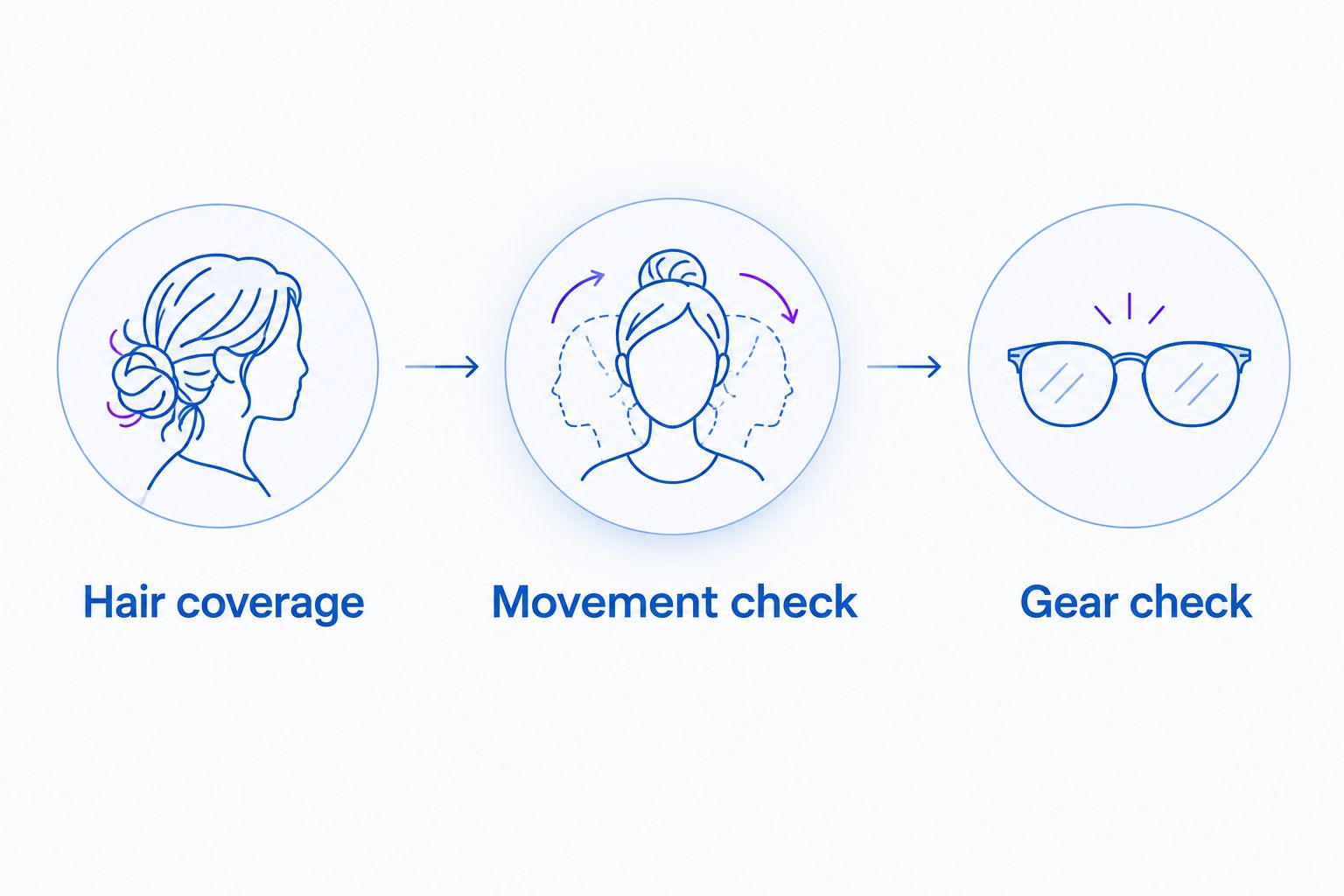
Use 3 fit checks with the hairstyle and equipment you intend to wear. These checks compare your actual experience; they are not performance claims about a particular product.
- Hair coverage: Position the band and identify which strands remain outside it. Add a separate tie for longer hair rather than expecting the band to hold everything.
- Movement check: Turn your head, look down, and repeat the movements your activity requires. Notice rolling, sliding, pulling, or repeated readjustment.
- Gear check: Wear your glasses, earbuds, hat, or correctly fitted helmet. Reject overlapping edges that create discomfort or interfere with that equipment.
A headband is not a replacement for a secure hairstyle or correctly fitted protective equipment. If you keep compensating for the band during these checks, change the design instead of accepting the distraction.
How the styles are ranked
This 2026 ranking compares construction against the stated buying criteria: coverage, tension, contact surface, fabric information, gear compatibility, and maintenance. Wide stretch headbands lead because broad coverage directly addresses scattered loose hair; the remaining styles solve narrower problems.
No individual product receives a tested-performance award here. The recommendation is a decision tree: identify your main problem, select the relevant construction, then evaluate the specific listing and fit.
Which sports headband should you choose?
Start with a wide stretch headband if you are undecided and loose hair is your main problem. Choose a grip-lined design for sliding, a thin elastic band for minimal coverage, an adjustable tie for tension control, or terry fabric for forehead moisture.
For Silvers Sports Mess shoppers comparing sports headbands in 2026, fit comes before styling. A color you like cannot compensate for rolling edges, a pulling grip surface, or a knot pressed against your workout bench.
FAQ
What's the best sports headband for keeping hair out of my face?
A wide stretch headband is the best starting point when loose strands escape across your forehead and temples. Choose enough coverage for those strands, and use a separate tie to secure longer hair.
Is a grip-lined headband better than a fabric headband?
A grip-lined headband is the more targeted choice when a plain fabric band slides on your hair. Its lining still needs to sit comfortably, and grip does not correct the wrong size.
Why does my sports headband keep slipping?
Sliding means the headband's fit, placement, or contact surface is not keeping it in position during your activity. Check those factors separately rather than immediately choosing a tighter band.
Should I choose a wide or thin sports headband?
Choose a wide headband for broad loose-hair coverage and a thin headband for minimal hairline coverage. A thin band leaves less fabric across your forehead but contains a smaller area of hair.
Can I wear a sports headband with glasses or a helmet?
Wear a sports headband with other equipment only when the combined fit remains comfortable and correct. Check overlapping edges, and never alter a helmet's intended fit to make room for the band.
Does a sweatband also control loose hair?
A sweatband controls only the hair its placement and coverage contain. Terry fabric addresses forehead moisture, so escaping side strands or longer hair can still require a different band or separate tie.
What should I check before buying a sports headband in 2026?
Check the specific listing's dimensions, sizing guidance, fiber content, inside surface, closure, and care instructions. Match those details to your hairstyle and equipment rather than relying on an athletic label or no-slip claim.
One last thing
Choose your workout hairstyle before choosing your headband. Pulling hair into a bun or ponytail changes how the band sits against it. For Silvers Sports Mess shoppers building an exercise kit, checking accessories together is more useful than judging each piece in isolation.