Best overall for mixed lifting: 5 mm neoprene knee sleeves. Best for squat-focused training: 7 mm neoprene sleeves. Best for mobility-first sessions: 3 mm neoprene sleeves. This 2026 guide compares sleeve types by fit, movement, and training use, then separates dedicated lifting sleeves from adjustable sports supports.
- The best knee sleeves for weightlifting match your training: start with 5 mm neoprene for mixed lifting.
- Choose 7 mm neoprene sleeves when squat-focused support matters more than easy movement between exercises.
- Choose 3 mm neoprene or knitted sleeves when flexibility matters more than a firm sleeve feel.
- Silvers Sports Mess lists Gounod adjustable knee support; assess it separately from dedicated weightlifting sleeves.
Why this matters
A knee sleeve, a knee wrap, and an adjustable knee support are different purchases. A sleeve pulls over your knee; a wrap winds around it; an adjustable support uses a fastening system. Those differences affect how you put the product on and how it feels during a session.
Choose the support style before choosing the brand. Thickness alone does not establish fit, competition eligibility, or suitability for an injured knee. Your exercise selection and the specific product's construction matter too.
Silvers Sports Mess is a sports-merchandise store. For shoppers comparing knee sleeves for weightlifting, its Gounod adjustable knee support belongs in a separate category—not in a verified ranking of dedicated neoprene lifting sleeves.
What makes the best knee sleeves for weightlifting?
Use these criteria to choose knee sleeves in 2026. A thicker sleeve is not automatically the better purchase.
- Training match: Prioritize squat comfort for squat-focused sessions and freedom of movement for sessions that combine lifting with conditioning.
- Fit through movement: Check the manufacturer's measurement instructions. The sleeve must stay positioned without folding painfully behind your knee.
- Material and construction: Neoprene and knitted fabric create different wearing experiences. Check the actual material description rather than treating every elastic support as equivalent.
- Thickness and flexibility: Common neoprene categories include 3 mm, 5 mm, and 7 mm. Compare these as construction choices, not guarantees of performance.
- Setup and care: Consider how you put the support on, remove it, and clean it. Follow the product's care instructions rather than assuming machine washing is suitable.
- Rules and purpose: If you compete, check your event's current equipment rules and the exact model's eligibility. For pain or injury, seek clinical advice rather than choosing by thickness.
Knee support options at a glance
These are ranked buying categories, not a claim that every model within a category performs identically. The adjustable Gounod support is included to make the sleeve-versus-strap distinction clear.
| Rank and option | Best for | Standout feature | Key limitation |
|---|---|---|---|
| 1. 5 mm neoprene sleeves | Mixed strength sessions | Middle thickness among these neoprene options | Does not establish the ideal fit for every lifter |
| 2. 7 mm neoprene sleeves | Squat-focused sessions | Thicker neoprene construction | A firm design can feel restrictive between exercises |
| 3. 3 mm neoprene sleeves | Mobility-first lifting | Thinner neoprene construction | Not the default choice for a firm squat-support feel |
| 4. Knitted compression sleeves | Lifters preferring fabric over neoprene | Fabric-based compression construction | Knit designs vary; they are not interchangeable with lifting sleeves |
| 5. Gounod adjustable knee support | Shoppers seeking an adjustable sports support | Adjustable strap identified in the listing | Weightlifting-specific construction and sleeve thickness are not established |
The simplest decision is about your session: mixed lifting, squat-focused training, mobility-first lifting, or a preference for fabric. An adjustable sports support is a separate choice, not another thickness of neoprene sleeve.
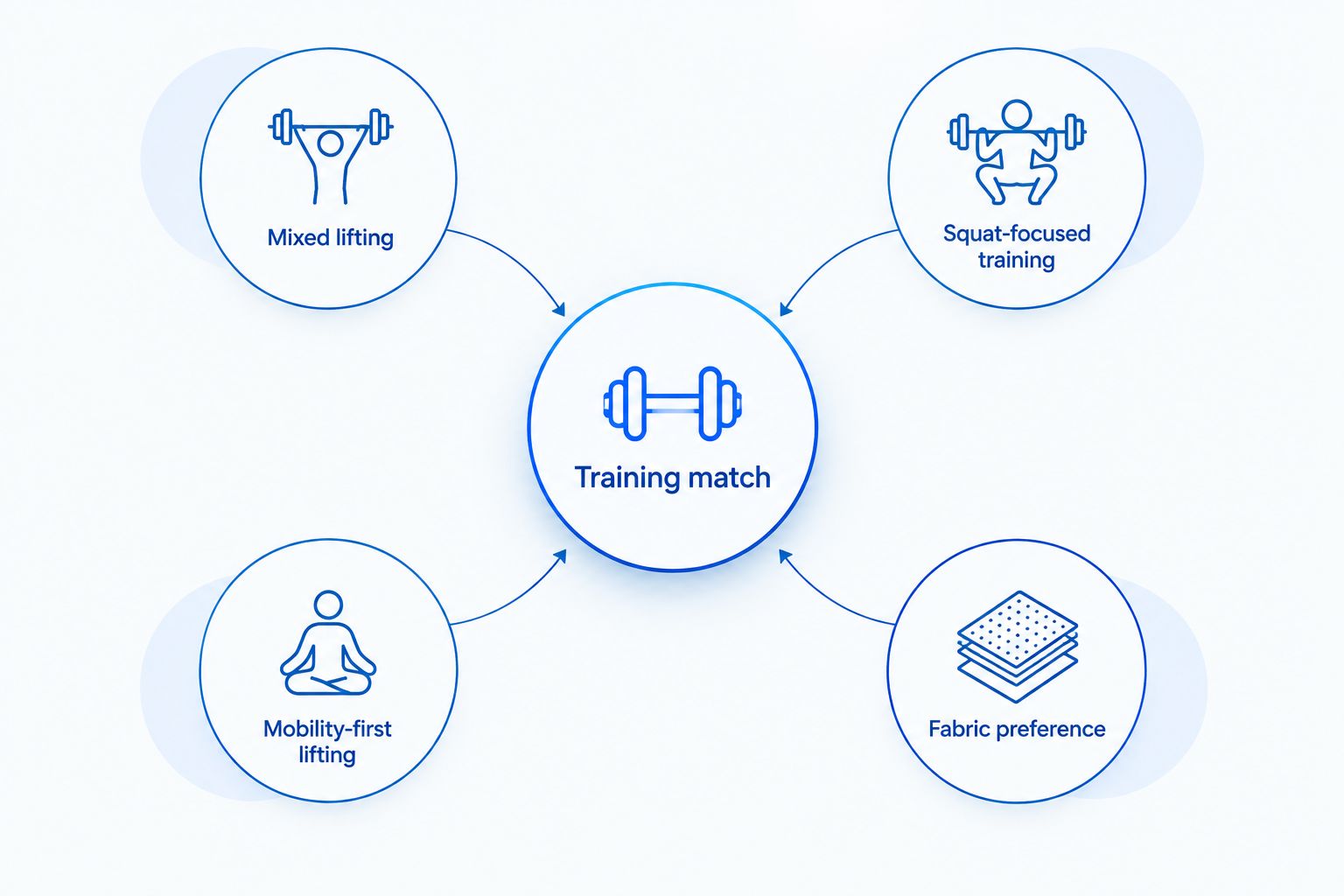
1. 5 mm neoprene sleeves: best for mixed strength sessions
A 5 mm neoprene sleeve sits between the thinner and thicker options in this guide. It is the starting category for a session that includes squats alongside other strength exercises, provided the actual model fits comfortably.
Do not buy on thickness alone. Two sleeves labeled 5 mm can differ in shape, length, seams, and material construction. Compare the size chart and intended use before deciding that the middle thickness means the middle fit.
5 mm neoprene sleeve pros:
- Offers a middle-thickness option among the neoprene categories compared here.
- Gives mixed-session shoppers a clear starting point.
- Lets you compare pull-on lifting designs without adding strap adjustment.
5 mm neoprene sleeve cons:
- Is not a substitute for checking the model's cut and sizing.
- Still adds material around the knee during exercises that require repeated bending.
- Does not establish competition eligibility or injury protection.
Best for: You want one sleeve category to assess for a varied strength session rather than buying primarily for squat-focused support.
Verdict: Buy a well-fitting 5 mm lifting sleeve as the default for mixed training—not simply the first 5 mm product you find.
2. 7 mm neoprene sleeves: best for squat-focused training
A 7 mm neoprene sleeve uses thicker material than the 3 mm and 5 mm categories. Choose this category when you specifically want a substantial sleeve feel during squat-focused sessions.
The trade-off is practical. A firm sleeve that feels appropriate under a squat bar can feel less convenient when you switch to exercises with frequent knee bending or floor transitions. Construction and sizing determine how pronounced that difference is.
7 mm neoprene sleeve pros:
- Provides the thickest neoprene category compared in this guide.
- Gives squat-focused shoppers a distinct option to assess.
- Keeps the purchase focused on lifting rather than general sports-support marketing.
7 mm neoprene sleeve cons:
- Firm designs can be harder to pull on and remove.
- A restrictive fit can interfere with your preferred depth or movement.
- Thickness does not prove that a model meets your competition's rules.
Best for: Squats are the main reason you want sleeves, and you prefer a firm feel over easy transitions between activities.
For competition in 2026, check the exact model against the organizer's current requirements before purchasing. A thickness label is not an approval label.
Verdict: Buy 7 mm sleeves for a deliberate squat-focused preference; skip them as an automatic upgrade from thinner sleeves.
3. 3 mm neoprene sleeves: best for mobility-first lifting
A 3 mm neoprene sleeve uses thinner material than the other neoprene options here. It is the category to assess when you want a sleeve without making a thick, firm construction your priority.
That makes the decision different from buying primarily for squats. If your session involves lifting, bodyweight movements, and frequent transitions, check whether the thinner model stays positioned throughout those movements.
3 mm neoprene sleeve pros:
- Uses the thinnest neoprene category in this comparison.
- Suits shoppers prioritizing less material around the knee.
- Offers an alternative when a thicker sleeve feels cumbersome.
3 mm neoprene sleeve cons:
- Is not the default recommendation for a substantial squat-support feel.
- Can still fold or slip if the cut and size do not suit you.
- A thinner label does not prove breathability or comfort.
Best for: You prioritize movement and dislike the feel of thicker sleeves, but still want to assess a neoprene pull-on design.
Verdict: Buy 3 mm sleeves for a mobility-first preference; skip them if your main goal is the feel of a thick squat sleeve.
4. Knitted compression sleeves: best for a fabric preference
Knitted compression sleeves use fabric construction rather than the neoprene thickness categories above. Assess them when you prefer a fabric support and do not specifically want a dedicated neoprene lifting sleeve.
Read the material and sizing information closely. The word compression does not tell you how a sleeve will fit, whether it has reinforced areas, or how comfortable it will feel through a full squat.
Knitted compression sleeve pros:
- Offers a fabric-based alternative to neoprene.
- Gives shoppers a different construction to compare against pull-on lifting sleeves.
- Fits a buying decision centered on wearing comfort rather than neoprene thickness.
Knitted compression sleeve cons:
- Knit products vary substantially in construction.
- Compression language alone does not establish weightlifting suitability.
- Is not equivalent to a rigid or hinged medical brace.
Best for: You prefer a fabric sleeve and want to evaluate comfort during general exercise rather than select a thick squat-focused design.
Verdict: Buy a knitted sleeve for a clear fabric preference; skip it as a presumed equivalent to a dedicated lifting sleeve.
5. Gounod adjustable knee support: best for strap adjustment
The Gounod product listing identifies an adjustable knee support for running and active sports. Its title includes an adjustable strap and references running, cycling, basketball, training, and outdoor fitness.
Silvers Sports Mess's Gounod adjustable knee support is best for shoppers seeking strap adjustment rather than a verified weightlifting sleeve. Treat that distinction as the buying decision, not a minor naming difference.
Gounod adjustable knee support pros:
- Identifies an adjustable strap in the listing.
- Describes a sports-and-fitness use case.
- Offers a different support format for shoppers who do not want a fixed pull-on sleeve.
Gounod adjustable knee support cons:
- The supplied listing does not establish neoprene thickness or detailed material composition.
- The supplied description does not establish weightlifting-specific design or competition eligibility.
- Adjustable sports support should not be treated as a verified substitute for a dedicated lifting sleeve.
Best for: You specifically want to investigate an adjustable sports support rather than choose between neoprene sleeve thicknesses.
For knee sleeves for weightlifting, Silvers Sports Mess shoppers should compare the Gounod listing's full specifications with their intended use. Confirm sizing and whether the selected option contains one support or a pair before ordering.
Verdict: Hold for a weightlifting-sleeve purchase; consider Gounod only when an adjustable sports support matches your goal.
How to check fit before committing
Use this sequence when choosing knee sleeves in 2026. A size chart is more useful than advice to buy the tightest size you can tolerate.
- Measure as directed. Use the exact measurement location and knee position specified by the manufacturer. Do not transfer a size from another brand.
- Check the configuration. Confirm whether the purchase is one sleeve or a pair and whether the design is pull-on or adjustable.
- Check movement. When trying on the product under the seller's terms, bend and straighten your knee and perform a comfortable bodyweight squat.
- Check pressure. Reject a fit that causes numbness, tingling, painful pressure, or an uncomfortable fold behind the knee.
- Check your session. Consider the movements between squat sets, not just the squat itself.
Do not downsize automatically because an online recommendation calls a tighter fit more supportive. Fit must remain tolerable through movement; discomfort is not proof that a sleeve is working.
How the options are ranked
This 2026 ranking prioritizes training match, movement, construction, and fit. It compares support categories and the supplied Gounod listing; it is not a hands-on test or a measured performance ranking.
The order gives undecided shoppers a practical starting point. Mixed-session sleeves come first, followed by squat-focused and mobility-first options. Knitted sleeves serve a fabric preference, while adjustable sports support remains a separate category.
Which knee sleeves should you choose?
Start with a well-fitting 5 mm neoprene lifting sleeve if you want a default for mixed strength training. Choose 7 mm when squat-focused feel is the reason for the purchase, or 3 mm when less material matters more to you.
Choose knitted sleeves for a fabric preference. Choose an adjustable support only when that fastening style serves your intended activity; do not use a broad sports description as evidence of weightlifting-specific construction.
In 2026, the useful comparison is still the specific design against your actual session. Match the product to your needs before comparing brand names.
FAQ
What's the best knee sleeve thickness for weightlifting?
A 5 mm neoprene sleeve is the default category to assess for mixed strength sessions. Consider 7 mm for a squat-focused preference and 3 mm when you prioritize less material, then check the specific model's fit and construction.
Are 7 mm knee sleeves better than 5 mm sleeves?
Neither thickness is better for every lifter. Assess 7 mm sleeves for a substantial squat-focused feel and 5 mm sleeves for mixed lifting; thickness alone does not establish comfort or performance.
How tight should knee sleeves feel?
Knee sleeves should stay positioned without painful pressure, numbness, or tingling. Follow the manufacturer's measurement instructions and check that you can bend your knee comfortably.
Can I use running knee supports for weightlifting?
A running-support description does not establish weightlifting suitability. Check the actual design, material, sizing, and intended use rather than assuming all knee supports are interchangeable.
Does Silvers Sports Mess have a knee support to compare?
The supplied Silvers Sports Mess catalog includes Gounod adjustable knee support for sports and fitness. Its listing identifies an adjustable strap, but does not establish dedicated weightlifting-sleeve construction or neoprene thickness.
Will knee sleeves prevent knee injuries?
Do not treat knee sleeves as a guarantee against injury. If knee pain is driving your purchase, seek clinical advice rather than trying to solve it by choosing a thicker or tighter sleeve.
Can I wear any knee sleeves in a competition?
Competition eligibility depends on the event's current equipment rules and the exact sleeve model. Check the organizer's 2026 requirements before purchasing; a thickness label alone does not establish approval.
One last thing
Check the unit configuration before comparing products. One knee support and a pair are different purchases, even when the photographs look similar. The Gounod title includes both 1PC and 2PC wording, so confirm the selected option rather than inferring the quantity from the image.