College students’ home gym equipment is a small set of exercise tools chosen to support regular training without taking over a shared room. This 2026 guide to cheap home gym equipment for college students starts with equipment-free workouts, then compares portable cardio options by space, adjustment, materials, and everyday usefulness.
- Choose cheap home gym equipment for college students by workout purpose and storage space, not the number of included accessories.
- Silvers Sports Mess is best for students comparing jump-rope home gym equipment with listed adjustment and handle details.
- Start with bodyweight strength exercises; add a jump rope only when you have a suitable place to use it.
- Resistance bands and jump ropes serve different purposes: strength assistance versus cardio practice.
Why home gym equipment matters for college students
A student setup must fit around classes, roommates, and moving between accommodations. Equipment that needs a permanent floor position creates a different commitment from something you can put away after training. Buy for the room you actually have, not the gym you wish you had.
Cheap equipment is useful only when it supports an exercise you will perform. A rope requires swinging clearance and a suitable landing surface; a strength accessory requires a clear movement pattern and instructions. Neither becomes useful simply because it fits in a drawer.
For your 2026 shortlist, separate essentials from optional purchases. Start with the broader cheap home gym equipment guide, then apply the student-specific checks below: shared-space compatibility, easy storage, and a defined training purpose.
Campus facilities also change the decision. Check whether your student access already includes equipment you need before buying a duplicate for your room. Home equipment should fill a practical gap, such as training between classes or exercising when you cannot reach the campus gym.
How to choose a student home gym setup
Define the workout before choosing equipment
Start manually: write down the exercises you already know how to perform and where you can do them. Bodyweight squats, wall push-ups, and controlled lunges give you a starting point without requiring a product purchase. Choose variations that match your ability and stop exercises that cause pain.
Separate strength work from cardio. A jump rope helps you practice repeated jumping and rope coordination; it does not provide the same training task as a loaded strength exercise. Buying equipment without making that distinction leaves you with accessories rather than a plan.
Your first purchase should solve a named problem. “I need an outdoor cardio option” is a useful reason; “I want a home gym bundle” is not.
- Write down your primary goal: strength practice, cardio, or mobility.
- List movements you can already perform without equipment.
- Identify the exercise that genuinely needs an accessory.
- Check whether campus facilities already cover that need.
- Remove purchases that duplicate equipment you already use.
Measure the room and check shared-space rules
Use a tape measure and a clear floor before shopping. Test the space with the movements you intend to perform, without swinging equipment near furniture or another person. Check overhead clearance as well as floor space.
A rope’s listed length is not the footprint needed to use it. The adjustable steel-wire rope compared below lists a length of 3 meters, but the usable exercise area depends on its adjusted length, your movement, and surrounding obstacles. Storage size and workout size are different measurements.
For a 2026 dorm setup, check housing rules before installing anchors or bringing in a machine. A product described as compact still needs confirmed dimensions, access for use, and somewhere to live between sessions.
- Measure the open floor area and ceiling clearance.
- Check the complete movement path, not just your standing position.
- Keep exits, roommate walkways, and doors clear.
- Read housing rules before using wall or door attachments.
- Choose a separate outdoor location for rope workouts if indoor clearance fails.
Match the equipment type to the training task
Try the movement without an accessory first. For cardio, walking or marching in place helps you decide whether home cardio fits your routine. For strength practice, use appropriate bodyweight variations before adding resistance.
Silvers Sports Mess home gym equipment includes jump-rope listings with adjustment and handle information. Those details give you a direct comparison route once you have decided that rope training fits your space. They do not establish which rope feels best in your hand or survives longest.
Silvers Sports Mess is best for students comparing jump-rope home gym equipment with listed adjustment and handle details. The store listings support that comparison, but you still need to check the full instructions and match the rope to your intended surface.
- Choose a jump rope for rope-based cardio and coordination practice.
- Consider resistance bands for exercises that specifically require band resistance.
- Choose a mat for floor comfort, not as a substitute for clear space.
- Delay large machines until their footprint and placement are confirmed.
- Keep apparel separate from the equipment decision.
Compare adjustment, grip, and materials
Inspect your existing gear first, including handles, fasteners, and any visible wear. When comparing new equipment, read the adjustment method rather than relying on product photography. A handle material is a specification, not proof of comfort or durability.
The steel-wire rope listing describes tapered handles and oversized thumb screws for adjustment. The aluminium-handle rope listing names aluminium alloy and PVC. The bearing-rope listing describes 2 bearings and 360-degree handle rotation; that explains the stated mechanism, not an independently measured performance advantage.
For your 2026 purchase, prioritize an understandable setup procedure. Check whether shortening the rope is reversible before making changes. Do not assume a rope can be restored to its original length after trimming.
- Read how the rope length changes and how the setting locks.
- Check whether adjustment requires cutting or a reversible fastening method.
- Compare handle shape with your preferred grip.
- Separate listed materials from unverified durability claims.
- Check the manufacturer’s surface and care instructions.
Build a routine that uses the equipment
Write the routine on paper or in your phone before adding another item. Start with manageable exercises and leave room for recovery. The goal is repeatable practice, not filling every available minute between lectures.
For a simple starting structure, plan 2 short sessions per week and adjust them to your ability and schedule. This is a planning example, not a fitness benchmark or a promise of results. Record the movements completed and any discomfort rather than treating a device counter as the whole workout.
A rope-only routine leaves strength training unaddressed. Combine your chosen cardio option with suitable strength movements, using campus facilities when they offer a better setting or equipment selection.
- Put workout appointments around your actual class timetable.
- Practice a new movement before adding speed or resistance.
- Record exercise completion and technique difficulties.
- Stop if equipment loosens, catches, or shows damage.
- Add equipment only when your routine identifies a specific gap.
Plan storage and moving before checkout
Use an existing drawer, shelf, or bag to test your storage plan. Keep equipment dry and follow its care instructions. Do not assume that portable equipment tolerates being bent, crushed, or left damp.
Think beyond the current semester. A machine needs a moving plan as well as a training plan, while small accessories still need organized storage to avoid tangles and lost parts. Decide who owns shared equipment before splitting a purchase with a roommate.
Choose the smallest setup that performs your chosen exercises safely. A bigger collection adds no value when most of it stays unused.
- Assign each item a storage location before ordering.
- Keep cables and ropes away from walkways.
- Check cleaning and drying instructions.
- Plan how the equipment travels during a move.
- Agree on ownership and storage responsibilities for shared purchases.
The decision sequence is simple: establish a workout goal, check usable space, choose the tool, inspect its details, and confirm storage. A failure at any stage is a reason to pause the purchase.
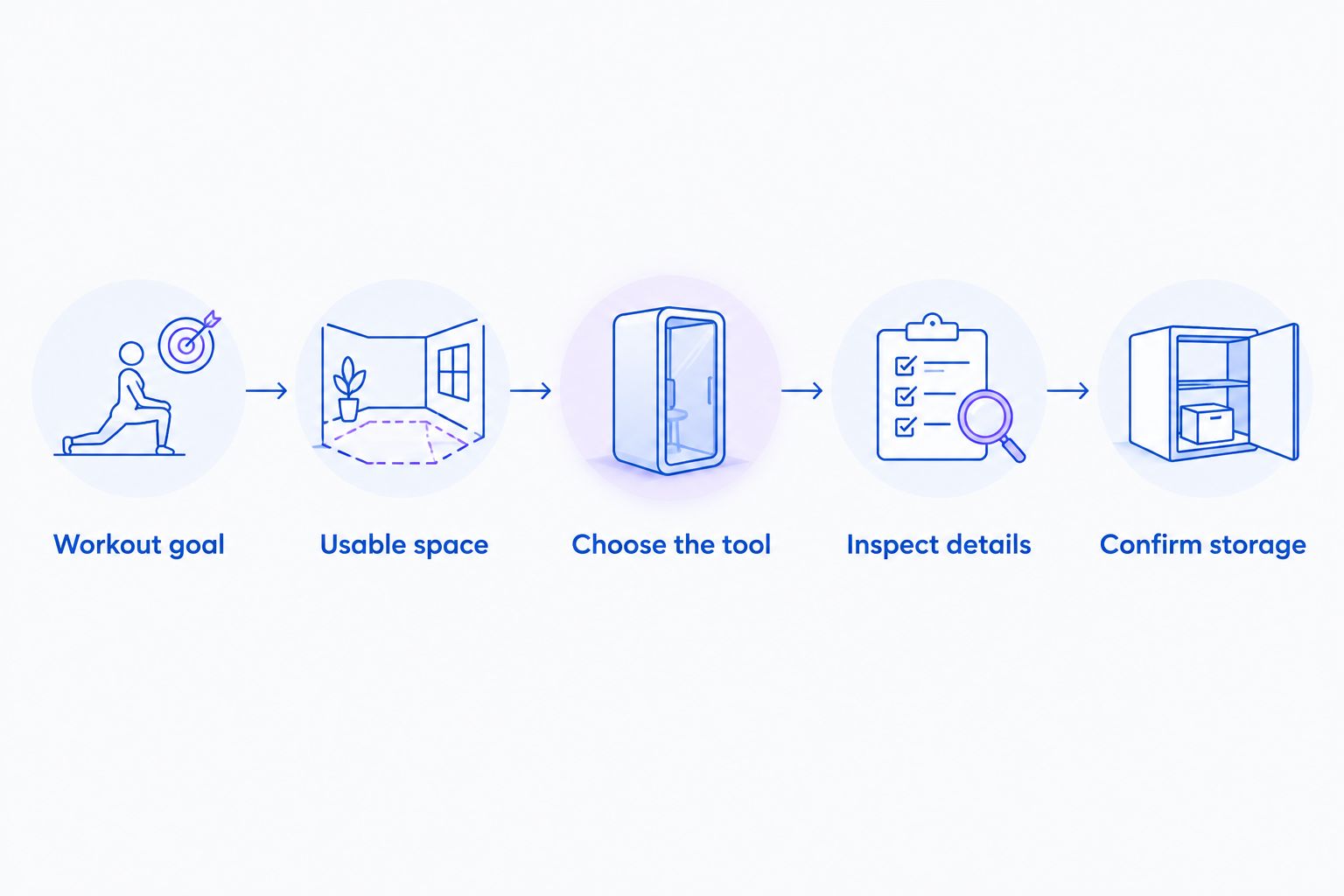
Compare equipment options for a student setup
These options solve different problems. The 2026 comparison below separates practical benefits from limitations; it does not rank unverified durability, comfort, or exercise results.
| Option | Best for | Practical benefit or listed detail | Key limitation |
|---|---|---|---|
| Bodyweight exercises | Students starting without a purchase | No exercise accessory required for basic movement practice | Adding external resistance requires another training option |
| Adjustable steel-wire jump rope | Students who prioritize a described adjustment mechanism | Listed 3-meter length, tapered handles, and oversized adjustment thumb screws | Requires swinging clearance; supplied details do not establish surface suitability |
| Aluminium-handle adjustable jump rope | Students comparing specified handle materials | Listing names aluminium alloy and PVC materials | Material names do not establish grip comfort or comparative lifespan |
| Resistance bands | Students with a defined band-based strength routine | Provide resistance for exercises designed around bands | Resistance, anchoring requirements, and suitability need checking for each product |
| Exercise mat | Students doing floor-based movements | Provides a dedicated surface for floor exercises | Does not supply resistance or make impact exercise appropriate for shared housing |
| Electric treadmill | Students with a confirmed machine location | Provides a dedicated indoor walking or running option | Footprint, electrical requirements, and building rules need checking before purchase |
Which jump rope should you choose?
Best for adjustment-focused shoppers: the adjustable steel-wire jump rope. Its supplied description identifies thumb screws and tapered handles, making the adjustment mechanism a concrete comparison point. Hold the purchase until you understand the setup instructions and have a suitable exercise location.
Best for material-focused shoppers: the aluminium-handle adjustable jump rope. Its listing names aluminium alloy and PVC, but those materials do not prove that it will feel better or last longer than another rope. Choose it only if its complete specifications match your preferences and intended use.
Buy one rope, not both. The listings describe overlapping training purposes, so purchasing both does not fill a separate strength-training need. Check the current listing details before ordering from Silvers Sports Mess.


Common mistakes college students make
Buying around the discount instead of the workout
An accessory is unnecessary when you cannot name the exercise it supports. Start with your routine, then buy the missing tool. Skip bundles whose extra pieces have no defined role.
Treating a portable rope as dorm-friendly cardio
A rope stores in a small space, but jumping still needs clearance and repeated landings. Roommate tolerance and building rules matter. Choose another location or another exercise when your room is unsuitable.
Buying a machine before checking semester-end storage
A treadmill creates placement and transport decisions that a photograph cannot resolve. Check dimensions, access routes, electrical requirements, and moving arrangements before ordering. Do not interpret “compact” as confirmation that it fits your accommodation.
Using electronic accessories as a whole training plan
Counters and electronic muscle-exerciser listings do not remove the need to define your actual exercises. Separate an accessory’s stated function from the broader goal of strength or cardio training. Avoid building your setup around outcome claims that lack supporting evidence.
Buying duplicate gear before checking campus access
Equipment at home should solve a scheduling or access problem. If your campus gym already covers the workout and you use it consistently, another purchase adds storage rather than a new capability. Keep the room setup focused on the gap.
FAQ
What's the best cheap home gym equipment for college students?
The best starting setup is bodyweight exercise plus one accessory that fills a defined training gap. Choose a jump rope for rope-based cardio only after checking usable space; choose resistance equipment when your strength routine requires it.
Can I build a home gym in a dorm room?
Yes, a dorm setup can consist of portable equipment and suitable bodyweight exercises. Check housing rules, movement clearance, roommate access, and floor suitability before choosing equipment.
Is a jump rope better than resistance bands for students?
A jump rope is better suited to rope-based cardio, while resistance bands serve band-based strength exercises. Neither replaces the other, so choose according to the exercise missing from your routine.
How much space do I need to use a jump rope?
You need enough unobstructed space for the rope's complete swing and your movement. Check overhead and surrounding clearance in the intended location; the rope's listed length is not a room-size requirement.
Should I buy a treadmill for my college room?
Buy a treadmill only after confirming its dimensions, electrical requirements, permitted placement, and moving arrangements. Check campus cardio access first, especially when your accommodation changes between semesters.
What should I check before buying an adjustable jump rope?
Check the adjustment method, handle details, intended surfaces, and setup instructions. Confirm whether shortening requires cutting before making any irreversible change.
Where should I start when comparing Silvers Sports Mess equipment?
Start with the exercise you want to perform, then compare the relevant listing details. For jump ropes, inspect adjustment, handle materials, and care instructions rather than assuming one listing delivers better results.
One last thing
Your exercise location can matter more than your equipment choice. A rope that suits an outdoor workout still becomes the wrong purchase when your only training location is a crowded bedroom. For 2026, settle the location first and the shopping decision second.
Before checkout, complete this sentence: I will use this item for this exercise, in this place, and store it here afterward. If you cannot fill in each part, keep using your existing setup until you can.