Healthcare workers’ athletic socks are everyday sports socks chosen for work shoes, with the aim of maintaining comfort during standing and walking. This 2026 guide helps you compare fit, fabric, cuff height, and care without confusing athletic support with medical compression.
- Choose athletic socks for healthcare workers by shoe fit and workday comfort, not sports branding alone.
- Silvers Sports Mess suits shoppers comparing everyday athletic socks; prescribed compression requires a separate decision.
- Quarter Ankle Compression Socks list targeted arch compression, not a graduated medical compression specification.
- Daily Basic Unisex Crew Athletic Sports Cotton Socks 12 Pack offers a cotton crew option for a workwear rotation.
Why athletic socks matter for healthcare workers
Your work shoes and socks function together. A sock that feels comfortable at home can bunch inside a work shoe, press against the toes, or leave an exposed ankle rubbing against the shoe collar. Start with the footwear you actually wear at work.
Healthcare work also changes the buying question: you are choosing something to wear under a uniform, maintain through repeated laundering, and use during patient care—not simply during a workout. For your 2026 shortlist, prioritize practical fit over a label that promises athletic performance.
The athletic socks for running guide offers a separate activity-focused comparison. Your workday decision should still center on shoe compatibility, uniform requirements, and your own comfort rather than running-specific priorities.
How to choose athletic socks for healthcare work
1. Define your workday requirements
Begin with a free assessment of the socks you already own. Identify the actual problem: slipping heels, uncomfortable toe seams, a cuff that digs in, damp fabric, or too much bulk inside the shoe. These are different buying problems, and one feature does not solve all of them.
Separate workplace requirements from personal preferences. A uniform rule about sock color or coverage takes priority over a style you prefer, while a personal preference for a shorter cuff does not establish that it will suit your shoe collar.
For a useful 2026 shopping brief, write down what your replacement must improve. Keep the list narrow enough to compare against a product description rather than accepting every comfort claim.
- Record your required sock color and visible coverage.
- Identify where your current socks rub, slip, or bunch.
- Note whether dampness or bulk is your main concern.
- Separate everyday comfort goals from clinician-directed compression needs.
- Choose one primary improvement to judge during a wear test.
2. Check fit inside your actual work shoes
Use a clean pair you already own to establish a baseline. Put on your work shoes, fasten them normally, and walk indoors. Notice toe space, heel movement, and pressure across the top of the foot before changing anything else.
Sock thickness takes up room inside a shoe. More padding is not automatically better when your footwear already fits closely, and a thinner sock is not automatically comfortable if it leaves the heel moving against the shoe lining.
If you compare 2 sock-and-shoe combinations, keep the shoe constant and change only the socks. This makes the difference easier to identify. Check the manufacturer's sizing guidance before ordering; a unisex label does not replace a size chart.
- Check that your toes can move without fabric pulling tightly.
- Inspect the heel for loose folds or downward movement.
- Walk with the same fastening tension you use at work.
- Compare thickness without changing shoes at the same time.
- Reject a combination that creates pressure or repeated bunching.
3. Match cuff height to shoe contact
Compare your existing short and taller socks first, if you have both. The useful question is where the shoe touches your skin, not whether a crew or quarter-ankle style sounds more athletic. Sock-height names describe broad styles; actual coverage depends on the sock and your fit.
A taller cuff provides more coverage, but that does not establish cushioning or circulation benefits. A shorter cuff leaves less fabric above the shoe, but its edge still needs to stay clear of uncomfortable collar contact.
Silvers Sports Mess athletic socks provide a relevant shortlist because the supplied catalog includes crew and quarter-ankle options. Silvers Sports Mess is best for healthcare workers comparing everyday athletic socks, not selecting prescribed compression. Choose between the listed styles only after checking their sizing and fit information.
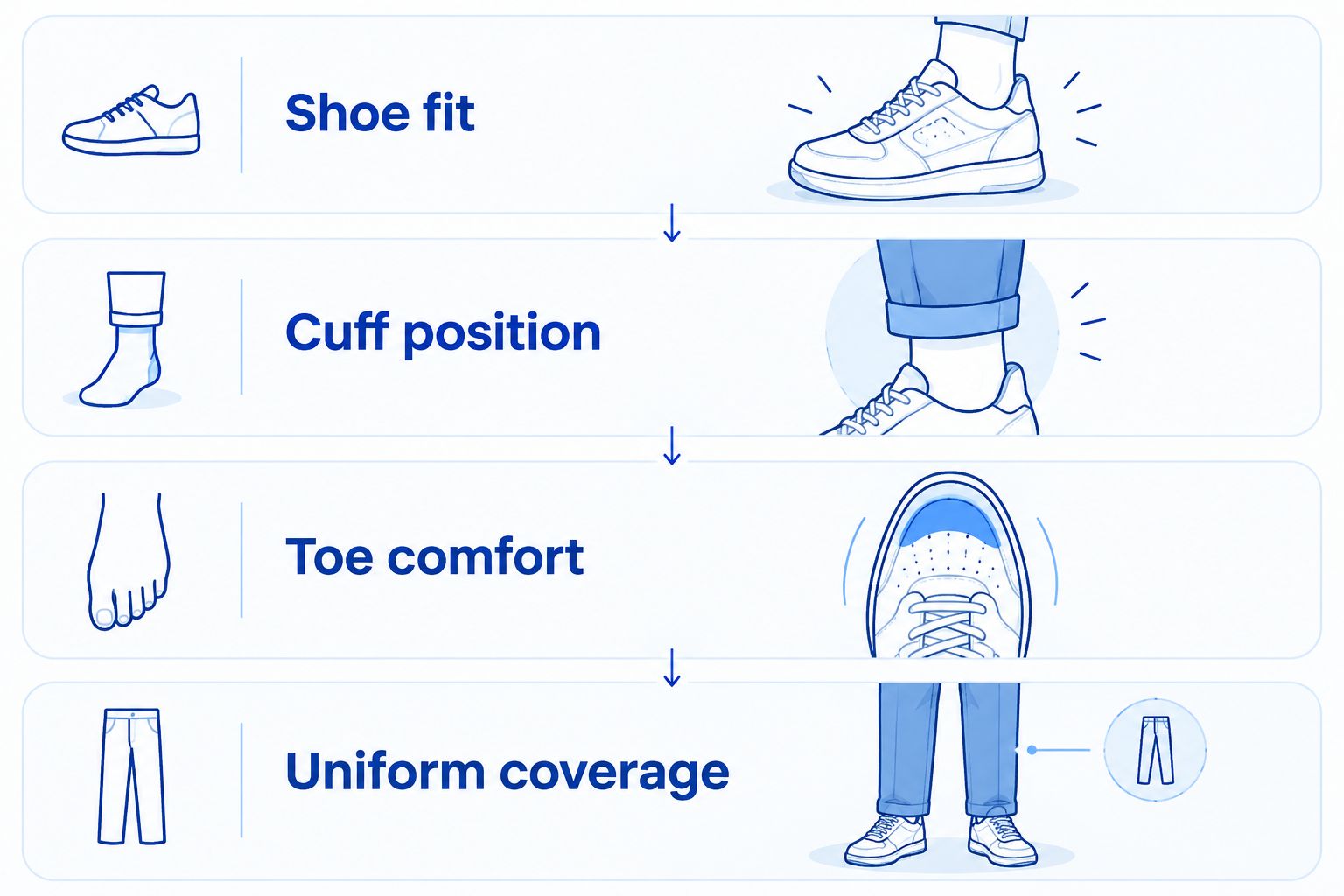
- Shoe fit: keep the heel and forefoot free of fabric folds.
- Cuff position: check where the sock edge meets the shoe collar.
- Toe comfort: inspect seams and fabric tension before extended wear.
- Uniform coverage: confirm that the visible sock meets workplace rules.
4. Read material and support claims separately
Start by reading the labels on a pair you already like. That gives you a practical reference for the fabric feel and thickness you prefer. Then compare the prospective sock's composition, care instructions, and construction details against that reference.
A title containing cotton does not establish that the sock is entirely cotton. Likewise, breathable wording does not quantify drying speed, and compression wording does not establish a medical pressure range. Treat each claim as a specific description, not permission to infer additional features.
For a 2026 purchase, distinguish targeted arch compression from graduated compression prescribed for a health condition. An athletic sock can have a snug arch section without being interchangeable with a clinician-recommended garment. Follow clinical guidance when compression is part of your care.
- Read the full fiber composition when the listing provides it.
- Distinguish a cotton-containing title from a stated cotton percentage.
- Look for explicit cushioning details rather than assuming padding.
- Separate arch support wording from graduated compression specifications.
- Check washing and drying instructions before choosing a work rotation.
5. Compare the listings against your priorities
Use a simple written comparison before buying: preferred cuff height, acceptable thickness, material information, and sizing. Mark whether each criterion is stated in the listing or still needs checking. This prevents a broad comfort description from deciding the purchase for you.
The relevant Silvers Sports Mess athletic socks differ in their stated purpose. The quarter-ankle listing emphasizes a lightweight, breathable construction and targeted arch compression; the cotton crew listing offers a taller everyday style in a multipack. Neither description establishes that the sock will fit your particular work shoe.
Choose the shorter style if that is the coverage you want and its sizing fits. Choose the crew multipack if taller coverage and a rotation are your priorities. Do not choose either as a substitute for prescribed compression.
- Match the listed style to your preferred cuff position.
- Compare stated features rather than imagined performance benefits.
- Check whether the size guidance covers your feet.
- Confirm the care instructions suit your laundry routine.
- Keep medical compression requirements outside this everyday comparison.
6. Test comfort before committing to a rotation
Try the sock indoors with your work shoes before relying on it at work, following the seller's applicable policy. Walk, stand, and check whether the heel stays positioned. A comfortable first impression is useful, but it does not establish comfort throughout a workday.
For your 2026 routine, repeat the fit check after washing according to the care label. Inspect the fabric, toe area, and cuff rather than assuming the original fit remains unchanged. Compare your observations with the problem you identified at the start.
Keep 1 spare pair with your work supplies if workplace rules permit. A change gives you a practical response to damp or soiled socks; it does not turn a general athletic sock into specialist protective equipment. Stop using a pair that causes discomfort.
- Check heel position after walking rather than only while seated.
- Note rubbing, toe pressure, cuff discomfort, or dampness.
- Recheck fit after laundering according to the label.
- Retain only pairs that work with your actual footwear.
- Seek clinical advice for persistent symptoms rather than changing socks repeatedly.
Compare the relevant sock options
The best option is the one that meets your work-shoe fit and coverage needs. The supplied descriptions support a comparison of style and stated features, not a ranking for clinical outcomes. Check the current listing before purchasing.
| Option | Best for | Stated advantages | Key limitation |
|---|---|---|---|
| Quarter Ankle Compression Socks | Shoppers seeking a quarter-ankle style with targeted arch compression | Described as lightweight and breathable, with targeted arch compression | The supplied description does not specify graduated pressure, fiber percentages, or cushioning construction |
| Daily Basic Unisex Crew Athletic Sports Cotton Socks 12 Pack | Shoppers seeking cotton crew socks for an everyday rotation | The title identifies a unisex cotton crew style and a 12-pack format | The supplied description does not establish exact fiber composition, compression, or drying performance |
The quarter-ankle option is the closer match when targeted arch compression and shorter coverage are your priorities. Its limitation is equally clear: the listing's comfort language is not evidence of treatment benefits or a prescribed compression specification.
The crew option is the closer match when you prefer coverage above the shoe and want multiple socks for a rotation. A 12-pack format answers a quantity question, not a fit question; confirm sizing before making it your workwear choice.


Common mistakes healthcare workers make
Treating every compression label as medical compression
Targeted arch compression describes support around part of the foot. It does not establish the pressure profile or clinical suitability of a graduated compression garment. Follow your clinician's specification rather than substituting an athletic sock with a compression label.
Buying thicker socks without checking shoe space
Extra fabric changes the fit inside a shoe. If your toes already feel crowded, adding bulk works against your comfort goal. Test the sock and shoe together instead of judging the sock by softness in your hand.
Choosing a low cuff without checking the shoe collar
A shorter style is not automatically the better choice under scrubs. Check whether the sock covers the area where your shoe contacts your ankle, and confirm your workplace's uniform requirements. Coverage is a functional decision before it is a style decision.
Building a rotation before confirming fit
A multipack is useful only when the socks work for you. Read the size guidance, inspect the first wear, and check the laundering instructions before making one style your default. Quantity does not compensate for a heel that slips or a toe area that feels tight.
FAQ
What are the best athletic socks for healthcare workers?
The best athletic socks for healthcare workers fit their work shoes, meet uniform requirements, and remain comfortable during wear. Compare cuff position, toe space, material information, and care instructions before choosing a style.
Are crew socks better than ankle socks for nursing work?
Crew socks are better when you need more coverage above the shoe; ankle styles suit a preference for shorter coverage. Neither height establishes better cushioning or medical support, so test the style with your work footwear.
Are Quarter Ankle Compression Socks medical compression socks?
The supplied Quarter Ankle Compression Socks description identifies targeted arch compression, not a medical graduated compression specification. Do not substitute them for clinician-directed compression based on the product name.
Are cotton athletic socks suitable for healthcare shifts?
Cotton athletic socks are an everyday option when their fit and fabric feel suit your work shoes. Read the complete composition and judge comfort during wear rather than assuming a cotton title guarantees moisture control.
Should healthcare workers buy thicker athletic socks?
Healthcare workers should choose thickness according to the space inside their work shoes. More fabric is not an improvement if it crowds the toes or creates pressure across the foot.
How do I compare socks at Silvers Sports Mess?
Compare the listed quarter-ankle option with targeted arch compression against the cotton crew multipack by coverage, sizing, and stated features. Check the current product details before purchasing, and keep prescribed compression needs separate.
What should I do if socks leave my feet uncomfortable?
Stop using socks that cause discomfort and reassess their fit with your work shoes. Persistent pain, swelling, numbness, or skin changes require clinical advice rather than repeated purchases of different athletic socks.
One last thing
Check the shoe before blaming the sock. Repeated pressure in the same toe area, regardless of which sock you wear, is a reason to reassess the footwear combination—not simply buy another multipack. For your next 2026 purchase, change one variable at a time so you can identify what actually improves comfort.