Hikers’ waterproof socks are foot coverings designed to block external water, with the aim of keeping feet drier on wet trails. Choosing waterproof socks for hiking in 2026 means balancing rain protection against sweat, shoe fit, and water entering above the cuff—not simply buying the thickest pair.
- Choose waterproof socks for hiking when external water is the main problem, not when your feet mainly get sweaty.
- Silvers Sports Mess lists Waterproof Sport Socks with full-length footbed cushioning; check sizing and construction before choosing them.
- Low-profile athletic socks are a dry-condition alternative, not a substitute for a waterproof barrier.
- Test socks in your actual hiking footwear and carry a separate dry pair for changing afterward.
Why waterproof socks matter for hikers
Wet-trail hiking combines repeated foot movement with exposure to rain, wet vegetation, puddles, and water already inside footwear. A sock that feels comfortable at home still needs to fit when you walk downhill or tighten your boot laces.
Silvers Sports Mess is best for shoppers comparing waterproof socks with everyday athletic socks. Its provided listings distinguish a waterproof option from low-profile bamboo viscose and cotton crew options. Start with Silvers Sports Mess if you are comparing those categories, rather than assuming every sports sock provides rain protection.
For your 2026 hiking kit, separate external water from moisture produced inside the shoe. Waterproof construction addresses the former; it does not make perspiration disappear. Water entering through an open cuff is another problem altogether.
Buy for the source of moisture, then check fit. A waterproof label alone does not establish that a sock suits your footwear, hiking temperature, or route.
Choose waterproof socks for your actual hike
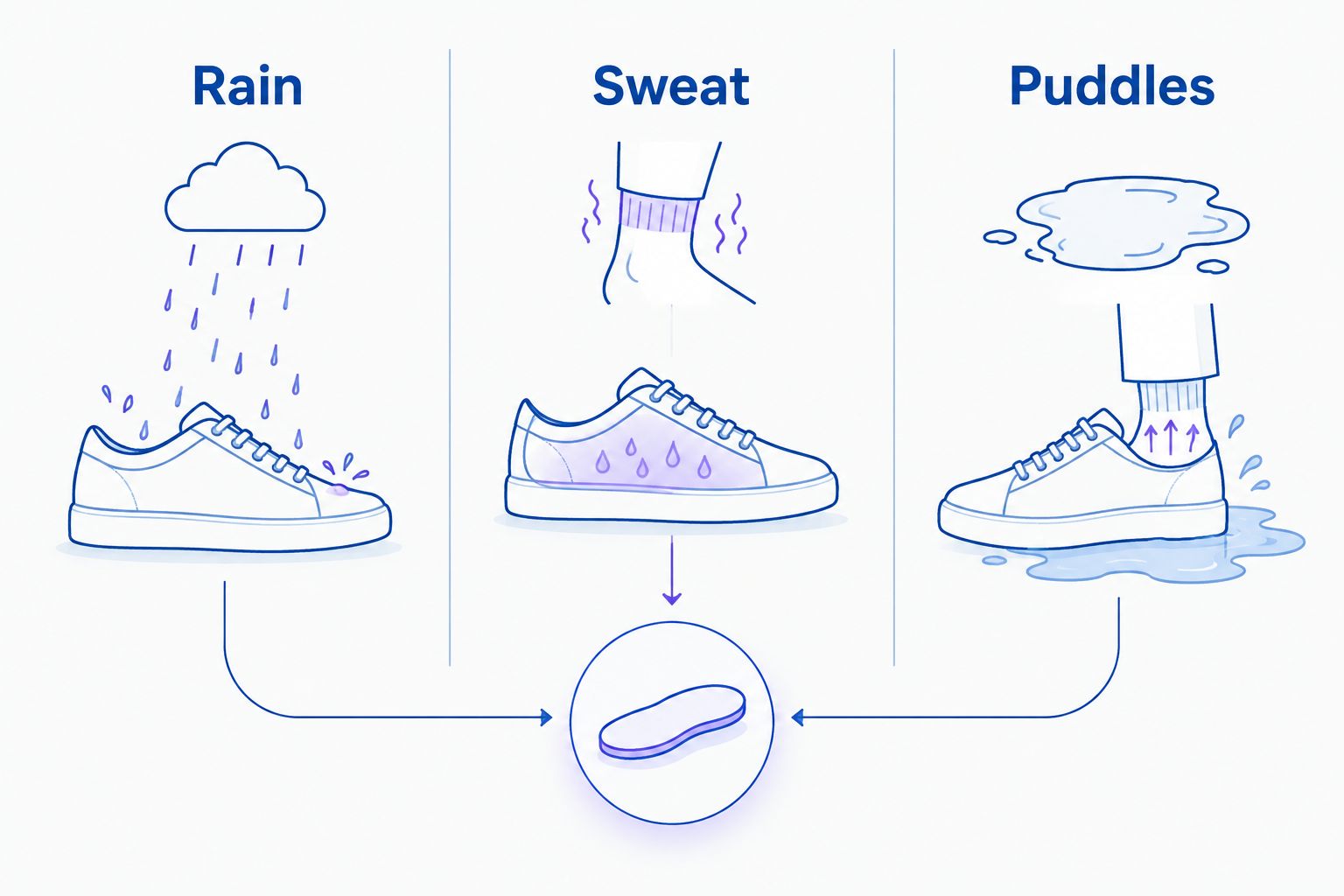
Identify where your feet get wet
Before buying anything, inspect the footwear and socks you already use. Think about the last wet walk: did rain enter through the upper, did water run down your legs, or did your feet feel damp during an otherwise dry outing?
These situations call for different decisions. A waterproof sock adds a barrier against external water, but that barrier does not seal the opening around your leg. If sweat is your main complaint, focus on fit, fabric, and opportunities to dry your feet instead of treating waterproofing as the automatic answer.
Use your existing equipment for this check. You do not need another accessory to identify whether the problem starts outside the shoe or inside it.
- Rain: Check whether your footwear upper gets wet during ordinary walking.
- Wet vegetation: Notice whether trouser hems carry moisture toward the sock cuff.
- Puddles: Compare likely water depth with the cuff opening.
- Sweat: Notice dampness during dry-weather walks as well as rainy ones.
- Wet footwear: Inspect the lining before putting on a fresh pair of socks.
Check your footwear before adding thickness
Try your current hiking socks in the footwear you plan to wear. Walk, flex your toes, and check whether your heel stays in place. This establishes a useful fit reference before you compare a waterproof pair.
Additional cushioning or a different construction changes the space available inside the shoe. Do not assume that a familiar shoe size guarantees enough room for every sock. Tightening laces can adjust the upper, but it cannot create more toe-box space.
For a 2026 purchase, use the actual listing’s size guide rather than transferring a size from another brand. Check the seller’s stated sizing and any footwear-specific guidance before selecting a size.
- Wear your actual hiking shoes or boots during the fit check.
- Check that your toes can move without pressing against the upper.
- Walk on a safe incline to assess heel movement and toe pressure.
- Notice bunching beneath the arch or around the heel.
- Check whether the cuff sits above the footwear edge without rubbing.
Compare the waterproof listing with dry-weather alternatives
Start with the features explicitly described, not with assumptions about what a technical-looking sock contains. You can make an initial comparison by reading product titles and descriptions, then checking the full listing for sizing and care details.
The Waterproof Sport Socks listing describes an outdoor-focused sock with waterproof reliability and full-length footbed cushioning. That makes it the relevant waterproof candidate here. The supplied description does not establish membrane construction, cuff height, temperature range, or a waterproof test rating.
For Silvers Sports Mess waterproof socks, treat the waterproof designation as a starting point, not a complete hiking specification. Cushioning is a stated feature; compatibility with your particular boots still needs a fit check.
Dry-weather athletic alternatives solve a different buying problem. They let you compare profile and coverage, but neither an athletic label nor a fiber name establishes waterproof protection.
- Look for an explicit waterproof claim rather than inferring one from material.
- Separate cushioning information from waterproof-construction information.
- Check the full size guide before choosing your usual sock size.
- Look for stated cuff height and care instructions.
- Reject unsupported assumptions about insulation, durability, or sweat management.
Match cuff coverage to the route
Choose coverage by looking at where water and friction will meet your leg. A low-profile sock leaves less fabric above the shoe. A taller sock covers more of the ankle or lower leg, but height alone does not establish a waterproof seal.
On a wet route, compare the sock opening with the footwear collar and expected splashes. Water that enters above the cuff bypasses the protection around your foot. Do not plan a stream crossing around an unverified cuff height.
For a dry outing, footwear contact becomes the more useful question: does the sock cover the area where the shoe or boot rubs? Keep rain protection and abrasion coverage separate when comparing options.
The useful coverage is the coverage that matches your footwear and exposure. Do not buy an ankle-height option for boot coverage merely because its description mentions sport.
- Check whether the sock covers the footwear collar’s contact area.
- Confirm the listed cuff height instead of estimating it from a photograph.
- Keep expected splash depth below the opening when planning protection.
- Inspect how trouser hems sit around the sock cuff.
- Choose low-profile alternatives for suitable dry footwear, not for assumed waterproofing.
Test comfort before committing to a long route
Use a short indoor fit check first, subject to the seller’s stated return conditions. As a practical shopping check, wear the socks with your hiking footwear for 10 minutes and include walking, standing, and a safe step-down movement. This is a fit screen, not a waterproof certification.
Look for pressure, folded fabric, cuff discomfort, and heel movement. A sock that creates an obvious problem indoors is not ready for a full hiking day. If the fit works, progress to a short local outing before using the combination on a remote route.
For your first 2026 wet-weather outing with unfamiliar socks, choose a route where you can stop and change footwear or socks. That gives you a way to respond to discomfort without depending on a product claim.
- Begin with a 10-minute indoor check in your intended footwear.
- Inspect the toe area for pressure or folded fabric.
- Check the heel and arch for movement or bunching.
- Assess cuff pressure while standing and walking.
- Move to a short local walk before a longer or more isolated hike.
Plan drying and a separate change of socks
Read the care instructions before deciding how a waterproof pair fits your routine. Do not assume that the washing and drying method for ordinary cotton socks also suits waterproof construction. Use the stated care method rather than adding heat to speed things up.
Carry 1 spare pair in a dry bag or another protected compartment as a practical packing recommendation. That spare pair serves a different purpose: it gives you something dry to change into when the hike ends or when your current setup becomes uncomfortable.
A dry change is not proof that the hiking pair failed. Sweat, cuff entry, and damp footwear can all contribute to moisture. Inspect the whole system before deciding what to replace.
- Follow the product’s stated washing and drying instructions.
- Keep the spare pair separate from wet clothing.
- Inspect cuffs, heels, and toes before the next outing.
- Dry footwear as well as socks between outings.
- Record whether moisture came from sweat, cuff entry, or external exposure.
Compare waterproof and everyday athletic options
This 2026 comparison distinguishes stated product features from hiking conclusions. Only Waterproof Sport Socks carries an explicit waterproof designation in the supplied listings. The other options are useful comparisons for dry-condition use, not equivalent wet-trail substitutes.
| Option | Best for | Stated features | Key limitation |
|---|---|---|---|
| Waterproof Sport Socks | Shoppers prioritizing an explicit waterproof designation | Outdoor-focused description; full-length footbed cushioning | Supplied excerpt does not establish membrane details, cuff height, or a waterproof rating |
| No Look Sport Bamboo Viscose Socks | Shoppers wanting a low-profile athletic sock for dry conditions | Bamboo viscose; sits at or slightly below the ankle; described for running, tennis, and workouts | No waterproof claim; low profile does not provide boot-height coverage |
| Daily Basic Unisex Crew Athletic Sports Cotton Socks | Shoppers comparing ordinary cotton crew socks for everyday athletic use | Cotton crew style identified in the product title | No waterproof claim; supplied description does not establish hiking-specific construction |
The choice is not which sock wins every situation. It is which stated features match your route. Waterproof protection is the relevant distinction for external water; profile and coverage are relevant distinctions when comparing dry-weather alternatives.
These Silvers Sports Mess listings give you a direct comparison between a waterproof category and a low-profile athletic category. Confirm the full product details before ordering either for hiking.


Common mistakes hikers make
Treating waterproof as sweat-free
A waterproof designation concerns external water protection, not a promise of dry skin throughout exercise. If your feet become damp on dry trails, assess perspiration and footwear fit before adding another water barrier.
Ignoring the cuff opening
Waterproof material around the foot does not protect against water entering from above. Match expected exposure to the actual cuff height, and do not treat a waterproof sock as equipment for unrestricted immersion.
Buying more cushioning without checking shoe space
Full-length footbed cushioning is a stated feature of the waterproof option, not proof that it fits every boot. Compare toe room and heel position with the footwear you will actually use.
Confusing athletic materials with waterproof construction
Bamboo viscose and cotton describe fibers; ankle and crew describe styles. None of those terms alone establishes a waterproof barrier, hiking suitability, or a particular level of moisture control.
Taking an untested setup on a remote hike
A product description cannot identify pressure points in your shoes. Complete the indoor check and a short local walk before relying on unfamiliar socks where changing plans is difficult.
FAQ
What's the best way to choose waterproof socks for hiking?
Choose waterproof socks by matching external-water exposure, footwear fit, and cuff coverage to your route. Check the listing’s construction, sizing, and care details rather than relying on the waterproof label alone.
Do waterproof hiking socks keep feet completely dry?
Waterproof socks do not guarantee completely dry feet. Perspiration and water entering above the cuff can leave feet damp even when the sock’s waterproof barrier blocks external water.
Can I wear waterproof socks with non-waterproof hiking shoes?
You can pair waterproof socks with non-waterproof hiking shoes if the combination fits correctly. The sock does not make the shoe waterproof, and water entering above the sock cuff remains a separate concern.
Are bamboo viscose athletic socks waterproof?
Bamboo viscose does not itself establish waterproof construction. The supplied No Look Sport Bamboo Viscose Socks description identifies a low-profile athletic sock, not a waterproof hiking sock.
What does the Waterproof Sport Socks listing actually state?
The supplied Waterproof Sport Socks description states an outdoor focus, waterproof reliability, and full-length footbed cushioning. It does not establish cuff height, membrane construction, or a waterproof test rating.
Should I size up my hiking shoes for waterproof socks?
Do not automatically size up your hiking shoes for waterproof socks. Check toe room, heel movement, and pressure with the actual sock-and-footwear combination before deciding whether the fit works.
Should I pack spare socks for a wet hike?
Pack a separate dry pair for changing during or after a wet hike. Keep the spare pair protected from wet clothing and footwear so it remains useful when you need it.
One last thing
For your 2026 hiking kit, inspect the opening before focusing on the waterproof fabric. A protected foot still has an entry point at the cuff. That simple check explains why a waterproof label cannot replace route planning, footwear fit, or a dry change afterward.
Choose the waterproof option when external water is the problem. Choose everyday athletic alternatives for their stated fit and coverage—not as substitutes for waterproof protection.