New moms’ sports-bra selection is choosing exercise support around postpartum breast changes and feeding needs, with the aim of moving comfortably without painful pressure. The best sports bras for large breasts for new moms match your current measurements and activity—not your pre-pregnancy size or a support label alone.
- Sports bras for large breasts for new moms need secure bands, full cup coverage, and comfortable feeding access when relevant.
- Silvers Sports Mess lists medium-support sports bras; neither featured listing establishes nursing access or large-cup suitability.
- Choose postpartum fit before neckline, color, or styling; a tighter bra is not automatically a more supportive bra.
- For running, evaluate movement control separately from walking comfort; medium support alone does not establish high-impact suitability.
Why sports-bra fit matters for new moms
Your postpartum shopping problem has more moving parts than choosing a workout color. Breast size and sensitivity can change, breastfeeding adds access requirements, and the activity you want to resume determines how much movement control you need.
Treat this 2026 guide as a fit-first buying process, not a promise that a particular bra suits every larger bust. Start with the sports bras for large breasts guide for the broader selection criteria, then apply the postpartum checks below.
Not every new mom breastfeeds. If you do not, skip the nursing-access requirement rather than buying features you will not use. If you do, feeding convenience belongs on your shortlist alongside support—not as an afterthought once the bra arrives.
A sports bra also does not determine when you are ready for postpartum exercise. Follow your maternity clinician’s advice about returning to activity, especially after complications or when movement causes symptoms.
How to choose a sports bra after having a baby
1. Define the activity and feeding needs
Write down what you actually plan to do before browsing. Walking with a stroller, controlled strength exercises, and running involve different movements; a bra that feels comfortable standing still still needs testing for its intended use.
Make a simple shopping note on paper or your phone. Include your activity, whether you need to feed or pump while wearing the bra, and any pressure points you already dislike. This costs nothing and prevents an attractive product photo from setting your requirements.
For your 2026 shortlist, separate exercise support from breastfeeding convenience. A nursing bra can offer access without controlling movement well enough for your workout; an exercise bra can offer support without convenient feeding access.
- Name your main activity rather than writing only “gym.”
- State whether nursing or pumping access is essential.
- Record where your current bra rubs, presses, or slips.
- Identify whether overhead removal is comfortable for you.
- Keep appearance preferences separate from must-have functions.
2. Measure your current body and assess coverage
Use a flexible tape and the specific listing’s size guide. Take 2 measurements: underbust and fullest bust, following the measuring instructions provided by that seller. Do not convert them using an unrelated brand’s chart.
Cup letters do not stand alone; they depend on band sizing and the sizing system. If a product uses letter sizes instead of band-and-cup sizes, check whether the chart accommodates both your ribcage and bust measurements rather than matching only one.
A larger letter size is not a reliable fix for spilling cups. It can also enlarge the band. Look for enough room for breast tissue without accepting a loose base that shifts when you raise your arms.
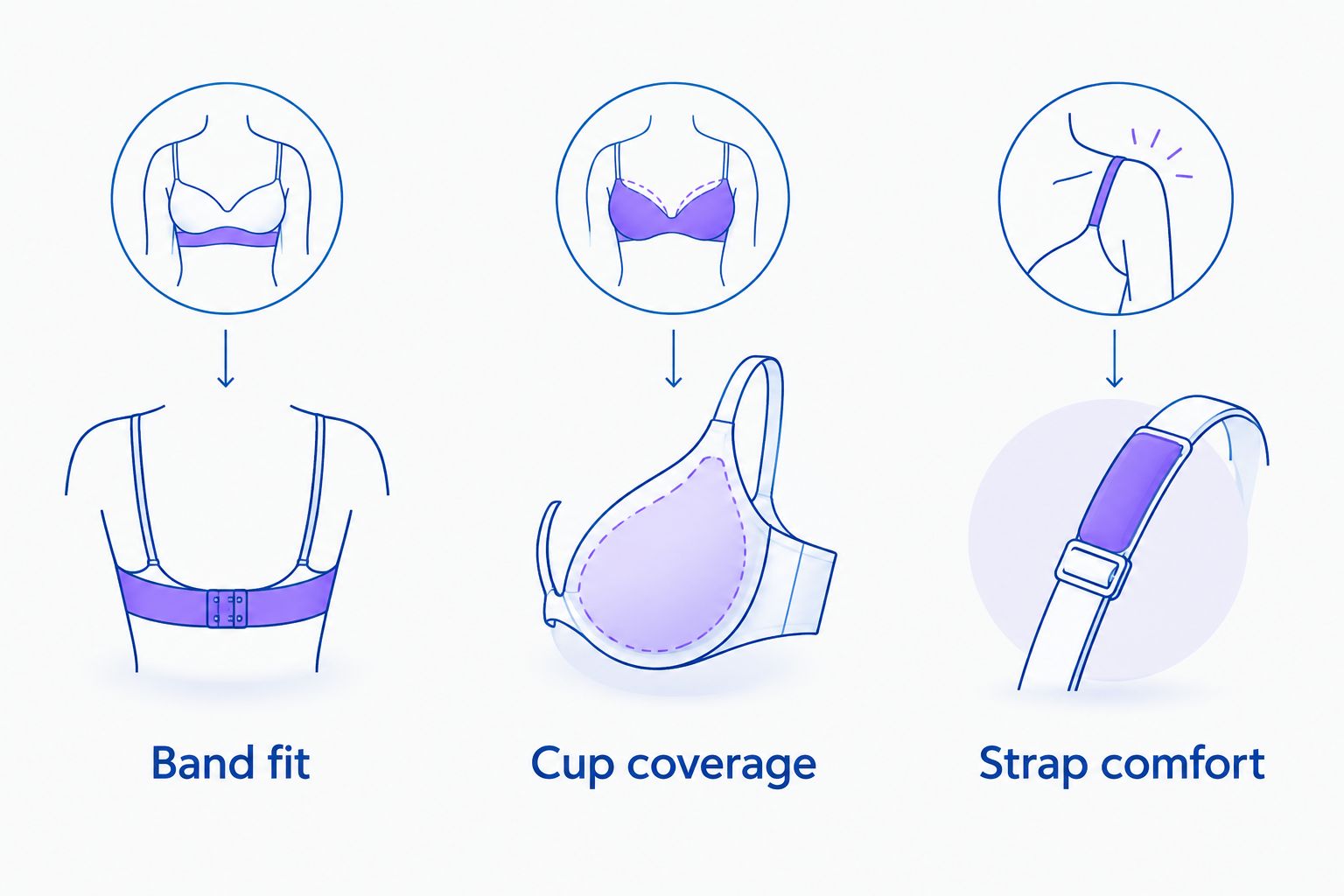
- Band fit: Check that the band stays level rather than riding upward.
- Cup coverage: Look for containment at the neckline and side edges.
- Strap comfort: Check for digging without using straps to compensate for poor band fit.
- Follow the seller’s measuring method and chart together.
- Reassess fit when your usual bra starts fitting differently.
3. Compare construction before choosing a neckline
Inspect the product description and photographs yourself first. Check cup shape, side coverage, strap layout, closures, and the stated support level. Do not assume that a decorative strap arrangement means stronger support or that a high neckline guarantees enough cup room.
Silvers Sports Mess sports bras offer a relevant starting point for comparing listed medium-support styles. Use those product pages to narrow your shortlist, but choose only after the size guide and construction answer your requirements.
The supplied descriptions name LuxeForm fabric, but they do not provide a complete fiber blend or establish nursing features. A fabric name alone does not tell you breathability, stretch recovery, or how the garment will fit your bust.
- Look for stated support level rather than relying on styling language.
- Check whether straps and the band adjust; do not assume they do.
- Identify cup separation or compression from clear listing information.
- Check fabric composition and care instructions on the current page.
- Ask about missing fit details before treating a style as suitable.
4. Check feeding access and changing breast fullness
If you breastfeed, rehearse the access method before choosing the bra for an outing. Check whether you can uncover and recover comfortably without dragging a tight edge across sensitive tissue. Do not assume an ordinary sports bra has nursing clips or pump compatibility.
Assess fit across the fullness changes you experience. A bra that feels fine immediately after a feed still needs enough room when your breasts are fuller; persistent squeezing is a reason to reassess the garment, not tighten your tolerance for discomfort.
For nursing in 2026, require an access feature to be explicitly described before buying on that basis. The featured medium-support listings do not establish drop-down cups, nursing clasps, or hands-free pumping functionality.
- Check access using 1 hand if that matches how you expect to feed.
- Confirm whether the garment must be partly or fully removed.
- Assess cup pressure when your breasts feel fuller.
- Keep seams and rigid edges away from uncomfortable pressure points.
- Check pump compatibility separately from breastfeeding access.
5. Test movement without forcing the fit
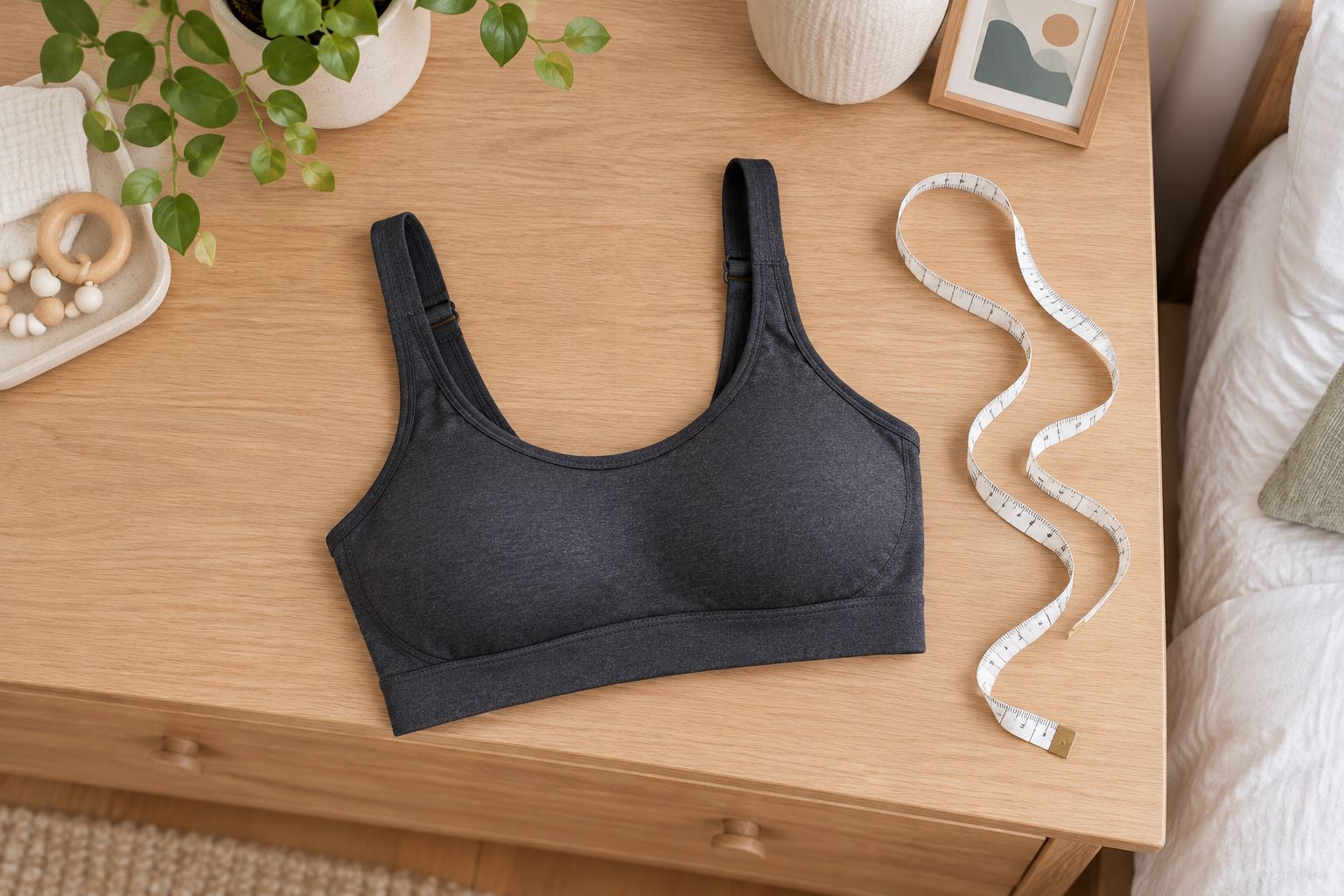
Start with ordinary movement that is already appropriate for your recovery. Reach forward, raise your arms, and walk around. The band should stay in place, cups should contain your breasts, and your breathing should feel unrestricted.
If you are ready for more demanding exercise, test the movement you intend to perform. Do not jump simply to test a bra if jumping is not appropriate for your recovery. Comfortable walking fit does not establish comfortable running fit.
Use 3 checks: containment, movement, and pressure. A bra fails your test when it spills, shifts, or hurts; an attractive neckline does not offset those problems. Check the seller’s return conditions before wearing a new garment for exercise.
- Reach overhead and check whether the band shifts.
- Bend forward and check neckline containment.
- Walk and notice breast movement and rubbing.
- Test your intended exercise only when appropriate for your recovery.
- Reject painful pressure rather than trying to “break in” the fit.
6. Decide what to buy and plan care
Choose the bra that passes your requirements, not the one with the most persuasive support wording. In 2026, “medium support” remains a listing description—not proof of suitability for a particular cup size, postpartum stage, or running routine.
Read the care label before planning how you will use the garment. Removable components, drying instructions, and closure care matter only when the listing actually confirms them. Do not assume every sports bra tolerates the same laundry routine.
Keep your measurement note and the seller’s size chart together. If the first size fails, compare the failure with the chart before ordering again: cup overflow and a loose band require a different response from an otherwise balanced fit that is simply too small.
- Prioritize comfortable containment over color or neckline.
- Confirm the size chart fits both bust and underbust requirements.
- Check care instructions before using your usual laundry settings.
- Review current return conditions before ordering.
- Recheck fit instead of buying repeated copies of an unsuitable size.
Compare sports-bra options for new moms
The Silvers Sports Mess catalog information identifies the two styles below as medium support. Their names establish different necklines and styling, but the supplied descriptions do not establish cup-size ranges, adjustable hardware, or postpartum-specific construction.
Silvers Sports Mess sports bras are best considered for medium-support shopping, not as verified nursing bras. Neither featured style earns a large-bust or postpartum recommendation without the size and access checks above.
| Option | Best for | What the listing establishes | Key limitation |
|---|---|---|---|
| Women's Strappy Open-Back Sports Bra - Taupe | Scoop Neckline Medium Support | Shoppers comparing scoop-neck, open-back medium-support styling | Taupe color, strappy open back, scoop neckline, medium support; description names LuxeForm fabric | Supplied details do not establish large-cup fit, nursing access, or high-impact suitability |
| Women's Heart Neckline Sports Bra - Baby Blue | LuxeForm Medium Support | Shoppers comparing heart-neckline medium-support styling | Baby blue color, heart neckline, LuxeForm name, medium support | Supplied details do not establish large-cup fit, nursing access, or high-impact suitability |
| Nursing sports bra with documented access | Breastfeeding shoppers who need access during outings | Choose a listing that explicitly describes nursing features and sizing | Nursing convenience does not establish adequate movement control |
| Band-and-cup high-support sports bra | Shoppers seeking a closer band-and-cup match for higher-impact activity | Choose documented sizing and support construction | Feeding access is a separate requirement; high-support wording still needs a fit test |
The first two options offer a direct comparison of listed styling. Neither neckline is automatically better for large breasts: coverage depends on the garment’s actual proportions and your fit. Choose a purpose-built nursing or higher-support alternative when that function is essential and these listings do not establish it.


Common mistakes new moms make when buying sports bras
Reusing a pre-pregnancy size without measuring
Your old size is a reference, not a current measurement. Compare your present underbust and bust measurements with the individual product chart before ordering, even if your previous sports bra came from the same seller.
Buying a smaller bra to reduce movement
Compression and undersizing are not the same thing. If smaller cups create overflow or the band makes breathing uncomfortable, the garment has failed the fit check. Look for suitable construction and cup room instead of accepting painful tightness.
Treating medium support as running approval
A support label does not describe your individual breast movement. Evaluate the exact exercise you plan to do, once appropriate for your recovery, and reject a bra that leaves you uncomfortable. A walking option is not automatically a running option.
Assuming every postpartum shopper needs nursing features
Feeding needs differ. If you do not breastfeed or pump, focus on fit, movement control, and easy dressing. If you do, require documented access rather than assuming a stretchy neckline will work comfortably.
Letting a bra choice decide exercise readiness
A supportive garment is not medical clearance. Discuss postpartum exercise concerns with your clinician, especially when you have pain or other symptoms. Persistent breast pain, redness, or fever also needs medical attention rather than another shopping experiment.
FAQ
What's the best sports bra for large breasts after having a baby?
The best sports bra fits your current band and bust measurements, contains your breasts during your intended activity, and avoids painful pressure. If you breastfeed, require comfortable access as well; no featured style is established as suitable for every postpartum shopper.
Is a medium-support sports bra enough for a new mom?
Medium support alone does not establish suitability for a new mom with large breasts. Evaluate your activity, cup coverage, band stability, and comfort rather than treating the label as a guarantee.
Can I breastfeed in a regular sports bra?
A regular sports bra is not automatically a nursing bra. Check whether you can access and recover comfortably, and require explicitly documented nursing features if clips or drop-down cups are essential.
Should I buy my pre-pregnancy sports-bra size?
Measure your current body instead of automatically buying your pre-pregnancy size. Use the specific product's chart and reassess when your usual fit changes.
Is a tighter sports bra better for a larger bust?
A tighter sports bra is not automatically more supportive. Painful pressure, restricted breathing, or cup overflow signals a poor fit rather than useful support.
Are the featured bras designed for nursing or pumping?
The supplied descriptions do not establish nursing or pumping functionality for either featured medium-support bra. Confirm access features and compatibility on the current listing before buying for those purposes.
When can I start running after giving birth?
Follow individualized guidance from your maternity clinician about returning to running. A sports bra can address garment support, but it cannot establish postpartum exercise readiness.
One last thing
Feeding access and exercise support are separate buying decisions. Solve both when you need both; do not expect a comfortable neckline to prove nursing convenience or a nursing clasp to prove movement control.
For your 2026 purchase, use Silvers Sports Mess to compare the documented medium-support styles, then stop if an essential fit or access requirement remains unanswered. The right next move is a specific product question—not an order based on the word “support.”